
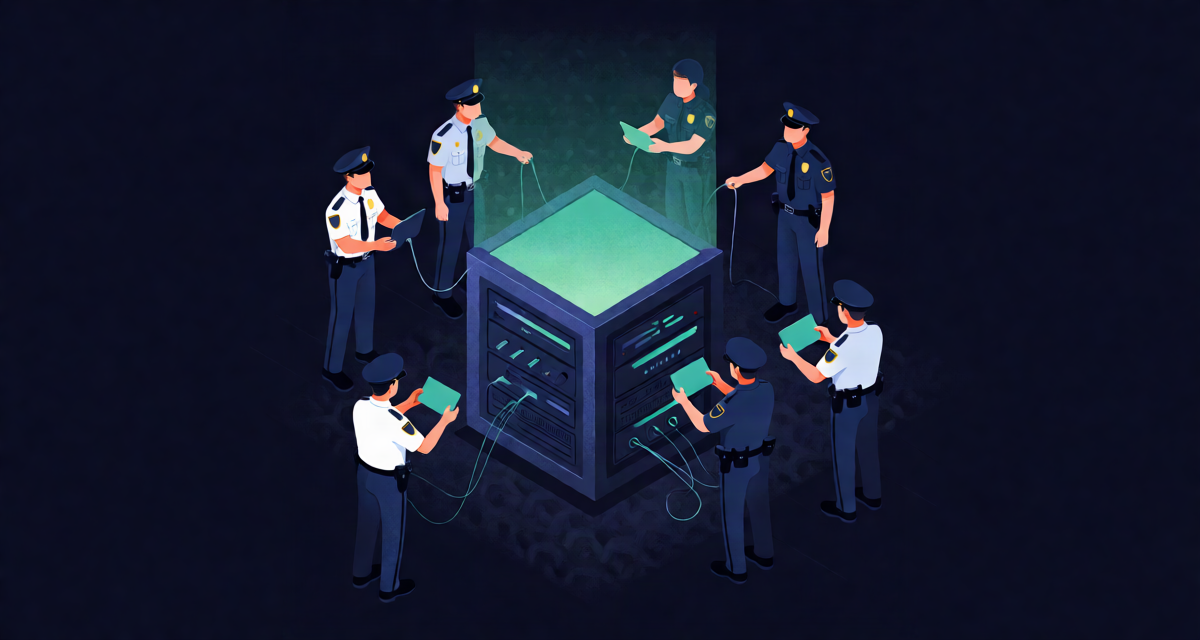
On 27 January 2021, one of the most damaging botnets in history went dark. In a coordinated action across eight countries, police took over Emotet’s infrastructure while its operators were mid-push of a new update — dismantling the malware loader that had been the front door for a decade of ransomware epidemics.
Passwordless in 2026: Why Passkeys Are Finally Killing the Password (and How Attackers Are Adapting)
What Studying 33 Historic Cyberattacks Taught Me About Defending Systems Today
Emotet was a malware-as-a-service loader botnet that began as a banking trojan in 2014 and evolved into the industry’s primary initial-access broker, selling infected footholds to ransomware crews including Ryuk and Conti. Europol announced the takedown on 27 January 2021 after a coordinated operation across eight countries, in which investigators took control of the command-and-control infrastructure and pushed a law-enforcement update that decoupled infected machines from the criminals. The durable lesson: takedowns disrupt criminal markets temporarily, but the loader-ecosystem business model Emotet pioneered — access sold to the highest bidder — outlived the brand and simply relocated.
What happened
The action came together under Europol’s European Multidiplinary Platform against Criminal Threats (EMPACT). Investigators in the Netherlands, Germany, the United States, the United Kingdom, France, Lithuania, Canada and Ukraine had spent months mapping Emotet’s roughly 700 servers spread across the world. In the days before 27 January, the Dutch National Police took over a key Emotet C2 node and obtained the database of victim machines. On takedown day, Emotet’s own infrastructure was used to push an update that redirected the botnet’s approximately 1.6 million monthly infections away from criminal control. Ukraine’s National Police raided known Emotet operators simultaneously, and Europol published the announcement with a countdown clock that had ticked on Emotet-linked domains since early January — a psychological flourish that had the underground speculating for weeks.
What made Emotet worth a cross-continent police effort was not its own payloads but its role as wholesale supplier. Since around 2017, the operators — tracked as Mummy Spider or TA542 — had rented out their infection capacity through an affiliate panel to other crime groups. QakBot, TrickBot, IcedID and Emotet itself all delivered second-stage malware; for a period, a majority of Ryuk and later Conti ransomware pre-encryption intrusions began with an Emotet infection. Security firms estimated Emotet was responsible for a disproportionate slice of all delivered malware worldwide — regardless of which gang ultimately monetised it.
The disruption was decisive but not permanent. In November 2021, researchers observed TrickBot infrastructure pushing an installer that rebuilt Emotet from scratch — the classic phoenix takedown. Emotet returned to full distribution by early 2022, ran malspam campaigns through 2023 with a rebuilt trail of epoch-based C2 infrastructure, and was eventually subsumed into a broader loader ecosystem in which its successor brands continue to operate. The January 2021 operation nonetheless remains the template for infrastructure takedowns: coordinated, multinational, and technically grounded in sinkholing the botnet’s own update mechanism.
How it worked
Emotet’s resilience was architectural. The botnet ran as a tiered command-and-control hierarchy — tier-1 nodes talked to victims, tier-2 relayed to hidden tier-3 masters — with each infected machine holding a compact list of hardcoded C2 addresses negotiated through epochs. Distribution relied primarily on weaponised Office documents inside malspam lures (shipping invoices, payment disputes, CVs), using macro malware to launch a PowerShell dropper that installed the loader. From there the payload marketplace took over.
victim receives malspam (thread-hijacked reply-chains common)
   -> opens .docm attachment -> macro pulls PowerShell dropper
        -> Emotet loader installs, kills competing malware
        -> beacons to tier-1 C2 (rotating epoch IPs)
                |
operator panel: access-for-hire to affiliates
   -> drops QakBot / TrickBot / IcedID etc.
   -> credential theft + lateral movement (Ryuk/Conti affiliates)
   -> ransomware detonation weeks later
Two techniques deserve permanent shelf-space in defender memory. First, thread hijacking: from 2020 Emotet hijacked existing email threads — quoting real historical conversations harvested from victims’ mailboxes — which made its lures dramatically more convincing than generic phishing and repeatedly defeated awareness training built on “spot the badly written email” heuristics. Second, the loader-ecosystem business model itself: because Emotet monetised access rather than extortion, its operators had no need to negotiate with victims or maintain ransomware infrastructure, making the brand resilient to the pressure that eventually broke pure-play ransomware gangs.
Impact and numbers
| Metric | Value | Source |
|---|---|---|
| Estimated infections at takedown | ~1.6M machines/each month of operation | Europol / Dutch NHTCU, Jan 2021 |
| C2 infrastructure seized/redirected | ~700 servers globally | Europol press release |
| Countries in the operation | 8 core (NL, DE, US, UK, FR, LT, CA, UA) | Europol, 2021-01-27 |
| Global malware share attributable to Emotet | ~10% of all delivered malware in some quarters | industry AV telemetry estimates |
| Estimated damage enabled (US DOJ) | $2.5B+ (all monetisation chains) | US DOJ announcement |
| Emotet return from TrickBot push | November 2021 | enterprise telemetry (Cryptolaemus/AdvIntel) |
Timeline
| Date | Event |
|---|---|
| 2014 | Emotet appears as banking trojan (Heodo), later MaaS pivot |
| 2017–2019 | Loader-era: second-stage drops of QakBot/TrickBot noted; Ryuk partnership peaks |
| 2020 | Thread-hijacked malspam at scale; Conti affiliate era |
| 2021-01-17 | Countdown GIF appears on Emotet-associated domains — investigators signal action |
| 2021-01-27 | Europol announces takedown; law-enforcement update decouples bots from operators |
| 2021-04-28 | Law-enforcement push of module removing Emotet from infected machines |
| 2021-11-14 | TrickBot distributes Emotet rebuild — brand returns |
| 2022–2023 | Rebuilt Emotet runs epochs E1–E5; activity declines into loader-ecosystem background |
Why it still matters in 2026
Emotet’s takedown is the case study for both the value and the ceiling of infrastructure disruption. The operation showed that synchronized legal + technical action across borders can decapitate even a 700-server botnet overnight — and the rebuild showed that when the underlying business model (access brokerage) stays profitable, the market re-creates the capability. Modern defenders face the same architecture under new brands: today’s initial-access brokers and malware affiliate programs are Emotet’s direct descendants, and SEO-poisoning and fake-update chains now play the role Emotet’s malspam once did. The strategic reading lives in our long-view piece on ransomware’s first decade; the lure-craft Emotet perfected is covered in the evolution of phishing.
Detection and hardening takeaways
- Block macros from the internet. Emotet’s primary vector for years was weaponised Office attachments; Attack Surface Reduction rules and blocking macros in files from the internet eliminate the whole class.
- Alert on PowerShell dropper patterns. Encoded-command launches from WINWORD.EXE, base64 blobs, and download-string patterns were Emotet’s consistent fingerprints.
- Detect thread-hijacking lures. Reply-chain phishing using authentic history means sender-reputation fails; hunt for internal-to-internal threads that suddenly carry attachments or links.
- Treat loader infections as pre-ransomware incidents. Time-to-ransom ran weeks; the window for credential resets, lateral movement review, and deployment of EDR coverage is the save window too.
- Track epoch infrastructure. Botnet re-emergence after takedowns follows SSL cert reuse and epoch patterns; threat-intel feeds that track these give hours of warning.
FAQ
Did the Emotet takedown actually reduce cybercrime?
Temporarily and partially. In the months after January 2021, ransomware intrusions dropped measurably because the cheapest initial-access supply had been removed — but competing loaders (QakBot, TrickBot, IcedID) absorbed the demand within weeks, and Emotet itself was rebuilt by November 2021. The operation proved coordination works and bought valuable time; it did not change the economics that fund loader botnets.
Why was Emotet called “the world’s most dangerous malware”?
Because of leverage, not payloads. Emotet rarely detonated ransomware itself; it functioned as the wholesale on-ramp through which many of the most destructive intrusions of 2018–2020 arrived. Its $2.5B+ damage estimate reflects the sum of all the campaigns it enabled — the same reason a wholesaler can out-earn its retail customers.
What happens to infected machines during a law-enforcement takedown?
In Emotet’s case the machines were pointed at police-controlled infrastructure. On 28 April 2021 investigators pushed a final module that removed Emotet’s autostart from infected hosts — one of the largest benign “updates” ever pushed to criminal infrastructure. Owners of cleaned machines still needed full follow-up: Emotet infections were routinely bundled with other malware that the cleanup did not touch.
What takedowns change, measured honestly
Measuring the Emotet takedown honestly requires separating three effects. The immediate: infrastructure seizure, the botnet controller infrastructure captured and its webhook-based update mechanism repurposed by law enforcement to remotely disarm client infections — one of the largest coordinated remediations ever executed, and proof that takedowns can reach the infected population, not just the operators. The structural: Emotet had served as a loader-for-hire, the distribution layer beneath TrickBot and ransomware operations alike, and its removal measurably degraded the ecosystem throughput — a real, quantifiable disruption to criminal supply chains that echoed through the following year incident statistics.
The long-term, honestly: the gap refilled. Emotet itself returned within months, rebuilt by its operators from retained infrastructure; the loader market diversified regardless; and the ecosystem absorbed the lesson that even successful takedowns are temporary against organizational criminal structures with infrastructure redundancy. The LockBit aftermath taught the same from the enforcement side — degradation is real, permanence is not.
The practice conclusion for defenders: treat takedowns as windows rather than victories — periods when related activity dips, indicators become stale, and remediation opportunities (like the remote-disarming) become available to anyone paying attention. The organizations that used the Emotet window to clean residual infections and harden the initial-access paths it had exploited converted a law-enforcement success into their own; the ones that celebrated and returned to baseline simply faced the rebuilt version with the same defenses, having learned nothing the operation could have taught them.
Windows, not victories; remediation opportunities, not celebrations — the honest takedown doctrine, available to every defender who reads enforcement news as a to-do list rather than a spectator sport.
- REvil Takedown: How 14 Arrests Killed Ransomware’s Worst Brand
- Ransomware at a Gas Compression Facility: CISA’s OT Alert
- HermeticWiper: Cyber Arson on Invasion Eve