
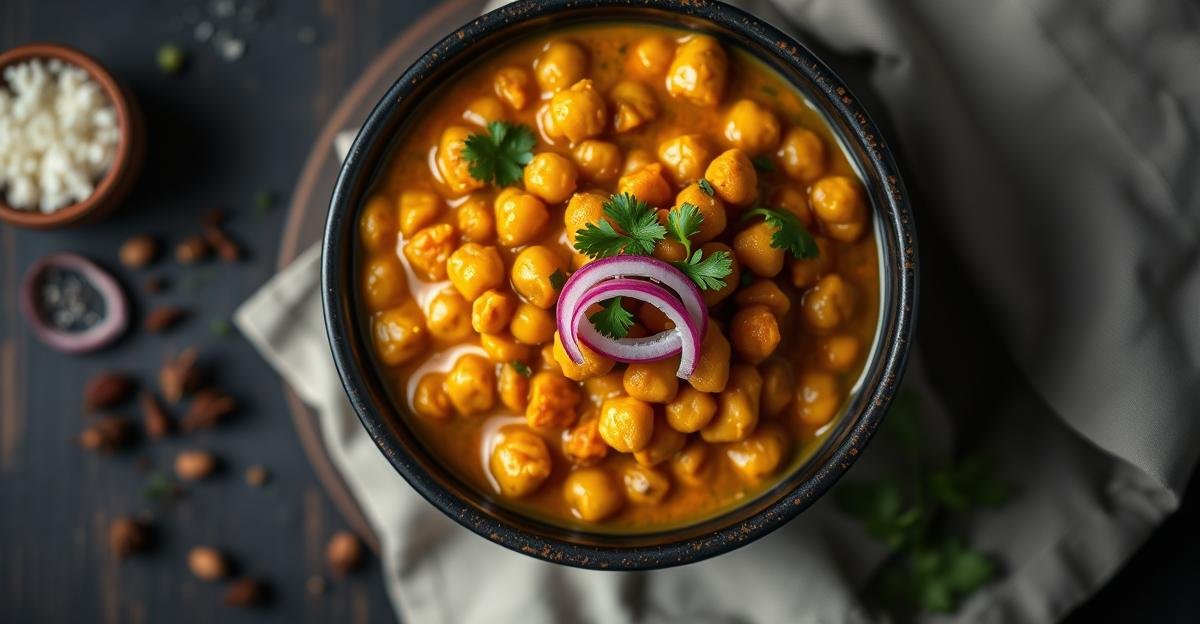
Introduction:
If you think Chole is just one dish with minor tweaks, boy, are you in for a treat. India is a vast, flavour-obsessed country, and every region that embraced chickpeas gave them their own spin. The result? A spectacular lineup of Chole variations that could fill an entire food festival — and honestly, they should.
Regional Chole Variations Across India
Pindi Chole — Rawalpindi’s Gift to India
Originally from Rawalpindi (now in Pakistan), Pindi Chole found a new home in India after Partition, and Punjabi families embraced it like it was always theirs. What makes Pindi Chole different? For starters, no onion, no tomato. Yes, you read that right — no tomatoes. Instead, the flavour comes from a robust spice blend of dried pomegranate seeds (anardana), amchur (dry mango powder), and a generous amount of tea leaves that give the chickpeas their signature dark, almost blackish-brown colour. The chickpeas are cooked until they’re tender but still hold their shape, and the gravy is thick, earthy, and deeply satisfying. Pindi Chole is drier than your average Chole preparation, making it perfect with a hot phulka or a crispy kulcha. One bite, and you will understand why Partition refugees carried this recipe across borders like a family heirloom.
Amritsari Chole — The Dark Horse
We have already talked about Amritsari Chole and the magic of Amritsar’s water, but let’s dive deeper into what sets it apart. Amritsari Chole is darker, richer, and packs more punch than any other variation. The secret? A generous dose of black tea (chai patti) and sometimes even dried amla (Indian gooseberry) added during cooking. This gives the gravy its trademark deep brown colour that looks almost like chocolate — but tastes nothing like it. The spice profile is bolder too: more green chillies, a heavier hand with the garam masala, and a finishing touch of julienned ginger and fresh coriander. Served with fluffy bhature or a pillowy kulcha, Amritsari Chole is the kind of meal that makes you close your eyes and nod slowly with every bite. It’s not just food — it’s a religious experience for your taste buds.
Kolkata Chole — The Bengali Twist
Bengalis and their love for food is legendary, so it’s no surprise they put their own spin on Chole. In Kolkata, Chole (often called Chholar Dal when made with the smaller Bengal gram) takes on a subtly sweeter profile. Coconut is frequently added to the gravy, giving it a mild, creamy sweetness that balances beautifully with the earthiness of the chickpeas. What really makes Kolkata Chole special is its pairing — it’s often served with luchi (deep-fried puffed bread made from maida) or radhaballabhi (luchi stuffed with urad dal). The combination is so beloved that it’s a staple at Bengali weddings, pujas, and Sunday morning breakfasts. If you ever visit Kolkata, do yourself a favour: find a small sweet shop early in the morning, order a plate of luchi-chholar dal, and watch the city wake up around you. It is pure, unfiltered happiness on a plate.
South Indian Sundal and Chana Masala
Down south, chickpeas take a completely different avatar. In Tamil Nadu, Sundal is a beloved snack made with boiled chickpeas (white or brown) tempered with mustard seeds, curry leaves, dried red chillies, grated coconut, and a squeeze of lime. It’s light, nutritious, and incredibly addictive. You will find Sundal being sold on every beach in Chennai during the evening, and it’s a must-have during the festival of Navaratri, when nine different types of Sundal are prepared over nine days. In Kerala, chickpeas curry (Kadala Curry) is a thick, coconut milk-based preparation served with appam or puttu for breakfast. The coconut milk tames the spices and creates a silky, comforting gravy. And in Karnataka, the humble chana is transformed into a spicy, tangy curry called Masala Kadale, often served with ragi mudde (finger millet balls) or rice. The South Indian approach to chickpeas is proof that you don’t need heavy creams or buckets of oil to make something spectacular — sometimes, a coconut and a tempering of mustard seeds is all you need.
Nutritional Profile of Chickpeas — A Superfood Disguised as Comfort Food
Here’s the beautiful irony of Chole: the dish that feels like a guilty pleasure is actually one of the healthiest things you can eat. Chickpeas are not just delicious — they are nutritional powerhouses that have been sustaining civilisations for thousands of years. Let’s break down what makes these little legumes so extraordinary.
A single cup of cooked chickpeas (approximately 164 grams) delivers around 269 calories, 45 grams of carbohydrates, 15 grams of protein, and a whopping 12.5 grams of dietary fibre. That fibre content alone is nearly half of your recommended daily intake. For anyone trying to manage their weight, control blood sugar, or simply eat cleaner, chickpeas are an absolute gift. The high fibre and protein combination keeps you full for hours, which means you are less likely to reach for that bag of chips at 4 PM.
Chickpeas are also loaded with vitamins and minerals. They are an excellent source of folate (vitamin B9), with one cup providing over 70% of your daily requirement. Folate is crucial for cell function and is especially important during pregnancy. They are rich in iron (about 26% of your daily need), which helps prevent anaemia and keeps your energy levels up. Manganese, phosphorus, copper, and magnesium are all present in significant amounts, supporting everything from bone health to brain function.
But here’s what really makes chickpeas stand out: they have a remarkably low glycemic index (GI) of about 28. This means they cause a slow, steady rise in blood sugar rather than a sharp spike. For diabetics or anyone watching their blood sugar levels, chickpeas are one of the best carbohydrate sources available. Multiple studies have shown that regular consumption of chickpeas can improve insulin sensitivity and reduce markers of inflammation in the body.
The plant protein in chickpeas deserves special mention too. While they are not a complete protein on their own (they lack sufficient methionine), combining them with rice or grains — which, funnily enough, is exactly how Indians have been eating them for centuries in the form of Chole Chawal — creates a complete amino acid profile. Your ancestors didn’t know about amino acids, but they somehow figured out the perfect protein combination. That’s culinary intuition at its finest.
Chickpeas also contain a range of antioxidants, including flavonoids like quercetin and kaempferol, which have been linked to reduced risk of chronic diseases such as heart disease and certain cancers. The resistant starch in chickpeas feeds the good bacteria in your gut, promoting a healthy microbiome. So the next time someone tells you Chole Bhature is junk food, you can confidently tell them that the chole part is practically a multivitamin — the bhatura is a different story, but we don’t talk about that.
How Chole Became a Global Phenomenon
For centuries, Chole was a regional Indian dish — beloved, yes, but largely unknown outside the subcontinent. Then the Indian diaspora happened, and everything changed. Today, you can walk into a restaurant in London, New York, Toronto, or Melbourne and order Chole with the same confidence as ordering a pizza or a burger. The journey of Chole from a Punjabi kitchen to global menus is a story of migration, adaptation, and the universal appeal of really good food.
The first wave of Chole’s global expansion came with Indian immigrants who moved to countries like the United Kingdom, Canada, and the United States in the mid-20th century. Punjabi immigrants, in particular, carried their culinary traditions with them, opening restaurants and dhabas that served authentic Chole Bhature, Chole Rice, and other North Indian staples. In the UK, where the Indian community is one of the largest ethnic minority groups, Chana Masala (the Anglicised name for Chole) became a curry house staple, sitting comfortably alongside Chicken Tikka Masala on menus across the country. British-Indian cuisine, for all its creative liberties, kept Chole relatively authentic — perhaps because it’s hard to mess up something this inherently delicious.
In the United States, the rise of Indian restaurants in the 1980s and 1990s brought Chole to a wider audience. But the real game-changer was the growing interest in vegetarian and plant-based diets. As Americans began looking for protein-rich meat alternatives, chickpeas emerged as a superstar ingredient. Chole, with its hearty texture and bold flavours, became the poster child for delicious vegetarian eating. Food blogs, YouTube channels, and cooking shows started featuring Chole recipes, and suddenly, people in Ohio and Oregon were making Chana Masala in their home kitchens, often with their own local twists — adding kale, using canned chickpeas for convenience, or serving it over quinoa instead of rice.
The Middle East deserves a mention here too. After all, chickpeas originated there, and the region has its own iconic chickpea dish — hummus. But in recent years, there’s been a beautiful cross-pollination between Indian and Middle Eastern chickpea cultures. Indian-spiced hummus, falafel served with chana masala, and fusion restaurants blending the two traditions have popped up in food capitals around the world. It’s a full-circle moment: the chickpea left the Middle East, travelled to India, got transformed into Chole, and now that Indian Chole is travelling back to the Middle East and beyond.
Social media has been the final accelerator. Instagram reels of sizzling Chole Bhature, TikTok recipes for “15-minute Chana Masala,” and food influencers declaring Chole as their ultimate comfort food have given the dish visibility that no traditional marketing could achieve. On any given day, the hashtag #chole has millions of views across platforms. The dish has transcended its cultural boundaries and become genuinely global — not because it was marketed well, but because it’s simply impossible to eat good Chole and not want more.
Conclusion
Chole is more than a dish — it’s a cultural artifact that tells the story of India’s culinary diversity, resilience, and ability to adapt. From the smoky Pindi Chole of Rawalpindi refugees to the sweet Chholar Dal of Bengali households, from the coconut-tempered Sundal of Tamil Nadu to the bold Amritsari Chole that makes grown adults close their eyes in reverence — every variation is a chapter in a story that spans centuries, borders, and cuisines. And now, as Chole conquers kitchens from London to Los Angeles, the story continues to grow. The humble chickpea, it turns out, had global ambitions all along.