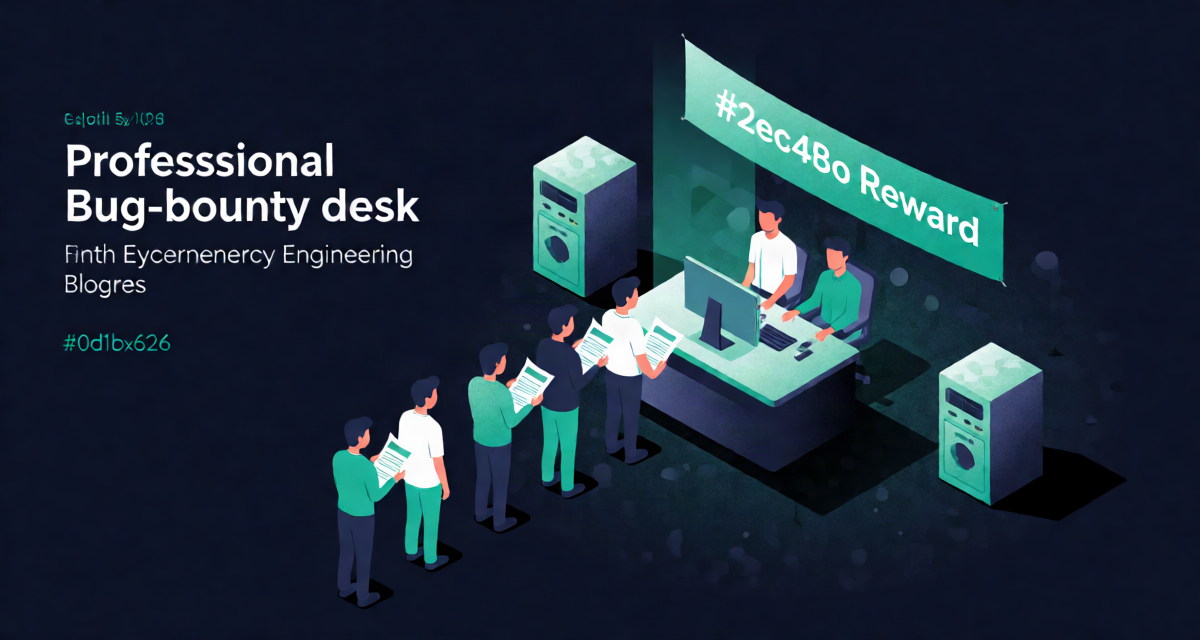
July 5, 2022: LockBit, then the world’s most productive ransomware operation, releases LockBit 3.0 (“LockBit Black”) — and, in a first for major ransomware gangs, launches its own bug bounty program on its clearnet infrastructure, offering rewards from $1,000 to $1 million for vulnerabilities found in its ransomware, its website, its Tor hidden services, and even for doxxing leads on its rivals. The security community’s reaction split between amusement and cold analysis: a criminal enterprise voluntarily adopting Silicon Valley’s quality-assurance and PR playbook. But the serious read was structural. LockBit had industrialised ransomware-as-a-service (RaaS) years earlier — affiliate model, builder kits, bulletproof hosting, a leak-site extortion pipeline — and the bug bounty was the logical next feature of that product maturity: paying for robustness of the criminal toolchain, marketing to a talent pool, and signalling impunity (clearnet site, public brand, no fear). The release also debuted LockBit 3.0’s technical refinements (borrowing heavily from BlackMatter/ALPHV-era code lineage), continuing the gang’s pattern of buying and repurposing rivals’ work. For defenders, July 2022’s spectacle crystallised the era’s defining condition: ransomware operations had become durable institutions — branded, iterative, customer-facing, and resilient enough to fund R&D — and the fight had permanently shifted from destroying gangs to out-competing their product cycle.
LockBit 3.0 (released July 2022, announced with the gang’s bug bounty program) marked the peak of ransomware-gang institutionalisation. The bounty itself: hosted on the gang’s clearnet site, paying $1,000–$1,000,000 for reported flaws in their software (ransomware payload, encryptor robustness), website, and Tor infrastructure — plus a doxxing category (bounties for rivals’ identities) that turned the program into competitive intelligence. No legitimate researcher was expected to participate (engaging would risk accessory liability); the program’s real functions were (1) product QA for the criminal toolchain (hybrids of stolen/borrowed code — LockBit 3.0 notably incorporated code from the BlackMatter-lineage — break on exotic environments; affiliates churn to competitors when builds fail), (2) recruitment marketing (a talent-pool signal inside the criminal ecosystem), and (3) impunity signalling (clearnet presence, public brand, law-enforcement-proof confidence). LockBit’s scale at the time: the highest-attack-volume RaaS brand of 2021–2022, with affiliate-driven intrusions accounting for a large share of publicly-posted ransomware incidents (per incident-response and blockchain-analytics telemetry — Chainalysis and Coveware among them — LockBit was the top posted-leak-site brand of 2022, claiming hundreds of victims across its leak sites from mid-2022 into early 2023). Aftermath arc: continued dominance through 2023 ($100M+ in affiliate payouts traced by Chainalysis), then the February 2024 Operation Cronos — NCA/FBI-led seizure of LockBit’s infrastructure (34 servers, 14,000 rogue accounts frozen) revealing the gang’s inner finances, followed by LockBit’s attempted reconstitution on relapsed infrastructure, continued decapitations through 2024, and the 2025 unmasking/sanctions wave against its administrator (the February 2024 unmasking of developer-administrator Dmitry Khoroshev, with a $10M rewards-offered bounty, preceded it). 2026 lens: the bug bounty looks small but was the tell — ransomware crews had become product companies with roadmaps, PR, and talent competition; the disruption era that followed (Cronos, ALPHV/BlackCat’s exit-scam collapse, Hive’s FBI-infiltration takedown) proved those institutions could be broken, but the affiliate talent pool re-forms under new brands within months. Durable lesson: fight the product cycle (patch velocity, backup discipline, no-pay posture) rather than the brand names, because brands are disposable — institutional practices are not.
What happened
LockBit 3.0’s release on July 5, 2022 arrived with the gang’s accustomed showmanship: an updated encryptor (code-named LockBit Black, and yes, substantially built on purchased BlackMatter code — the criminal market’s version of acquire-and-integrate), refreshed leak-site branding, and the novelty that grabbed headlines: a bug bounty program open on the gang’s public-facing site. The bounty’s terms covered the gang’s software stack and infrastructure, topped out at a headline $1 million, and included the rivals-doxxing category that read as either mischief or market positioning.
The program served the machine that made LockBit dominant. As a ransomware-as-a-service operation, LockBit’s revenue depended on affiliate success: intruders who brought access deployed LockBit’s encryptor and extorted under its leak-site brand, splitting proceeds. Affiliate loyalty followed product quality — and product quality meant builds that ran reliably across Windows environments, evaded mainstream EDR, and didn’t break on edge cases (a failed encryption run means no ransom, and angry affiliates churn to Conti-successors or ALPHV). Paying researchers (or at least appearing to) was cheaper than losing affiliates to a competitor’s more polished builder.
The clearnet spectacle mattered too. A criminal brand confident enough to run a public bug bounty — with a marketing page, reward tiers, and terms of engagement — was telling victims, affiliates, and law enforcement the same thing: we are infrastructure now, not a crew. That confidence tracked the reality of 2022: ransomware payments were running at historically record levels (Chainalysis-era estimates for 2022 traced more than $500M, with true totals believed substantially higher), Conti had imploded post-Ukraine-statements and its talent scattered into successor brands, and LockBit absorbed market share as the steadiest franchise. The institutional read was correct — and so was the sequel: institutions accumulate investigation surface, and Operation Cronos (February 2024) seized that infrastructure, froze affiliate finances, and unmasked leadership, proving the brand’s durability had limits. But the affiliates, tooling, and playbooks scattered onward — exactly as the product-cycle model predicts.
Ransomware-as-a-service, industrialised
LockBit's machine (2022 state):

  AFFILIATES (intruders w/ access)
    -> deploy LockBit encryptor
    -> extort under LockBit brand
    -> revenue split w/ operator

  OPERATOR (LockBit core)
    product: builder kits, encryptor,
      stealer, leak-site CMS
    QA: bug bounty (Jul 2022+)
      $1k-$1M for toolchain flaws
      + rivals-doxxing category
    hosting: bulletproof + clearnet
      marketing site (impunity signal)

  LOCKBIT 3.0 TECH (Jul 2022):
    code lineage: bought/reused
      BlackMatter (which traced to
      DarkSide/Conti lineage)
    focus: EDR evasion, reliability
      across target environments

  MARKET CONTEXT (2022):
    top leak-site brand by volume
    Conti collapse (Feb-Jun 2022)
      -> talent scatters -> LockBit
      absorbs share
    payments era: $500M+ traced
      (true totals higher)

  THE INSTITUTIONAL ARC:
    2022-07 product-company peak
      (bug bounty = R&D + PR)
    2023   $100M+ payouts traced
    2024-02 Operation Cronos:
      infra seized, finances frozen,
      admin unmasked (Khoroshev,
      $10M reward)
    2024-25 reconstitution attempts,
      continued decapitations,
      sanctions wave
    lesson: brands disposable;
      affiliate pool persists
Impact and numbers
| Metric | Value |
|---|---|
| Release | LockBit 3.0 (“LockBit Black”), July 5, 2022 |
| Bounty range | $1,000 – $1,000,000 |
| Bounty scope | Ransomware, website, Tor infrastructure + rivals-doxxing category |
| Hosting | Clearnet marketing site (impunity signal) + bulletproof/Tor ops |
| Code lineage | 3.0 built substantially on purchased BlackMatter code |
| 2022 market position | Top ransomware brand by posted-victim volume |
| Traced payments (era) | 2022 traced totals $500M+ (all ransomware; LockBit largest share) |
| Epilogue | Operation Cronos (Feb 2024): infrastructure seized, finances frozen, admin unmasked with $10M reward |
Timeline
| Date | Event |
|---|---|
| 2021–2022 | LockBit 2.0 era: affiliate-driven growth to top-volume RaaS brand |
| 2022-02 – 2022-06 | Conti collapses after pro-Russia statements leak; talent scatters to successors |
| 2022-07-05 | LockBit 3.0 released with criminal bug bounty program ($1k–$1M) |
| 2023 | Dominance continues; Chainalysis traces $100M+ in LockBit affiliate payouts |
| 2024-02 | Operation Cronos: NCA/FBI-led seizures, finance freezes, Khoroshev unmasked |
| 2024–2025 | Reconstitution attempts; continued law-enforcement pressure; sanctions wave |
Why it still matters in 2026
Because the bug bounty was the moment the security industry finally internalised — frog in the boiling pan — what ransomware had become, and because the aftermath proved both halves of the lesson. The institutional half: LockBit ran like a product company — release cadence, quality incentives, marketing, talent competition — and that made it durable exactly as long as the institution held, no longer. Operation Cronos didn’t end ransomware; it ended a brand. The affiliate pool, initial-access brokers, and negotiation playbooks reassembled under successor banners within months, which is why 2024–2026’s landscape features the same aggregate attack volume cycling through new names — a whack-a-mole dynamic visible in every quarterly leak-site census since. The product-cycle half: what actually reduces ransomware yield isn’t brand takedowns but degradation of the product’s economics — faster patching of the initial-access vectors (phishing, VPN/edge-device CVEs, credential abuse), immutable-and-tested backups that remove the extortion lever, regulated-nation no-pay pressures that cut revenue, and EDR-vs-evasion arms races that raise affiliate costs. The 2026 policy consensus (ransomware-payment reporting regimes, aggressive sanctions on facilitators, focusing takedowns on infrastructure rather than individuals) all follows from accepting the product-cycle model the bounty announced. And the bounty itself retains a symbolic afterlife: every time a criminal crew now runs “customer support,” mirrors sites with uptime SLAs, or publishes affiliates handbooks, the industry recognises the pattern — because LockBit made it impossible not to.
Detection and hardening takeaways
- Fight the access vectors, not the brand. LockBit-class operations live on recycled access: unpatched edge devices (VPN, RDP-exposed services), phished credentials, and bought initial-access listings. Your ransomware defence is measured in patch velocity on internet-facing CVEs and phish-resistant MFA coverage — metrics indifferent to which gang’s encryptor eventually arrives.
- Backups as extortion-killers. The product only monetises when data loss and leak threats bite. Immutable, offline-verified, restore-tested backups (including cloud-object lock configurations) plus network segmentation that keeps backup infrastructure unreachable from production identities remain the highest-ROI controls against the entire RaaS ecosystem, whatever its current branding.
- Monitor the leak-site census as threat intel. Public leak-site tracking (who’s posting whom, at what volume) is free intelligence on affiliate reassembly: post-Cronos successor brands, talent migration, and targeting-shifts show up there first. Fold it into sector-alerting — if your industry spikes on a new brand’s site, your grey-noise alerting should treat it as an elevated-risk window.
- Plan for institution-grade adversaries, execute on hygiene. The operational takeaway of LockBit’s maturity is that even mid-tier gangs now run reliable tooling, tested negotiation psychology, and multi-track extortion (encrypt + leak + DDoS + direct-victim-customers pressure). IR retainers, segmentation, and pressure-tested comms plans are table stakes — but they only pay off atop the boring basics, because affiliates still enter through the same five doors they used in 2022.
- Engagement legality: the bounty is a trap. For researchers, “bug bounties” from criminal organisations create real accessory exposure (and sting-infrastructure risk — post-Cronos, seized gang sites have hosted law-enforcement payloads). The correct posture is reporting to national cyber authorities; treating criminal bounty pages as recruitment marketing, not legitimate programs, is both the legal and the professional norm.
FAQ
Did anyone legitimately claim a LockBit bounty?
Publicly verifiable claims are scarce to nonexistent — and that’s expected. Credible researchers faced (and face) accessory liability, sanctions exposure, and the risk that any “program” is intelligence collection or a sting; the criminal-side participants who might have claimed quietly have no reason to publicise. The program’s visible output was marketing; that was always its primary product.
Why would a gang need software QA anyway?
Because their software runs in hostile production environments — thousands of victim networks with exotic configurations, security tooling, and — critically — the code wasn’t theirs to begin with (bought BlackMatter lineage, assembled by different hands). Failed or crashed encryption runs mean failed extortion, failed extortion means affiliate churn, and affiliate churn means competitor share. RaaS economics make reliability a revenue line, hence the bounty.
Was LockBit 3.0 meaningfully different from 2.0?
Technically, an evolution: heavy reuse of purchased BlackMatter code (itself of DarkSide lineage), refined evasion, and packaging for affiliate self-service. The strategic novelty of July 2022 was institutional (brand maturity, bounty marketing), not cryptographic — the same AES/RSA hybrid schemes with per-victim keys that the entire ecosystem runs on.
Did Operation Cronos actually kill LockBit?
It killed the institution’s centre: infrastructure, finances, admin identity, and — critically — the myth of invulnerability that the clearnet bounty had symbolised. Reconstitution attempts followed on relapsed infrastructure, and the brand persisted in diminished form through 2024–2025 under continued pressure. But the broader point held: the affiliate talent and playbooks migrated outward, sustaining aggregate ransomware volume under new banners — which is why defenders target the product cycle, not the logo.
Related Reading
- What Studying 33 Historic Cyberattacks Taught Me About Defending Systems Today
- Passwordless in 2026: Why Passkeys Are Finally Killing the Password (and How Attackers Are Adapting)
- 2022–2024: Lapsus$, Change Healthcare & the XZ Backdoor
- Authoritative reference: CISA Known Exploited Vulnerabilities
- Costa Rica’s Conti Emergency: When Ransomware Became a National
- Travelex Ransomware 2020: When Sodinokibi Crippled a Currency Giant
- Ransomware at a Gas Compression Facility: CISA’s OT Alert