“The beauty, the beauty of Kashmir. Is this the land where the devil will fall in love?”
Kashmir — a name that evokes images of snow-capped peaks, serene lakes, and houseboats gently rocking on crystalline waters. It is a land that poets have immortalized, emperors have coveted, and travelers have dreamed of visiting at least once in their lifetime. Yet, behind this breathtaking facade lies a story of turmoil, manipulation, and an unrelenting struggle for identity that has consumed generations. The land of heaven was engulfed in flames ignited by self-centred individuals who failed to understand the aspirations of the Kashmiri people. While Kashmiris expressed their desire for freedom, the question of what they sought freedom from remained dangerously unanswered.
The plight of the Kashmiri people, like their fellow countrymen, resonates with the fundamental human desire for quality education, accessible healthcare, and a secure future for their children. Unfortunately, these aspirations were systematically overshadowed by the helplessness they faced and the greed of a select few operating from across the border. This article is not just a political analysis — it is an attempt to understand the human story behind the headlines, the propaganda, and the politics that have defined the Kashmir valley for over three decades.
The Seeds of Conflict
To truly understand the roots of the Kashmir conflict, we must journey back to 1989 — a year that changed the valley forever and set in motion a chain of events whose reverberations are still felt today. It was a year when misguided youth fell prey to the machinations of cross-border elements, sparking what would become one of the world’s longest-running and deadliest proxy wars. Our children became pawns in a geopolitical chess game, receiving training and arms in Pakistan-occupied Kashmir. Strikingly, the individuals who championed this cause — the self-styled liberators and freedom fighters — did not sacrifice their own children. They invoked the Quran to lure impressionable young men, yet their understanding of the holy text seemed profoundly misplaced. If they truly comprehended the teachings of the Quran, they would have embraced peace, compassion, and coexistence instead of perpetuating decades of bloodshed and despair.
The insurgency that erupted in 1989 was not an organic uprising born of genuine local grievances. It was carefully orchestrated, funded, and sustained by forces that had everything to gain from instability in the region and nothing to lose. Young men, many still in their teens, were systematically brainwashed into believing that violence was the only path to dignity and self-respect. They were handed AK-47s and told they were warriors fighting a righteous cause. In reality, they were cannon fodder in a geopolitical game far larger than themselves — pawns sacrificed for the ambitions of generals and politicians who would never set foot on the battlefield.
The early 1990s saw the conflict escalate dramatically. Militant groups mushroomed across the valley, each claiming to be the true representative of Kashmiri aspirations. But as these groups proliferated, so did infighting, extortion, and violence against the very people they claimed to protect. The initial sympathy that some Kashmiris may have had for the militant cause evaporated quickly as the reality of living under the gun became apparent. Ordinary citizens found themselves caught between militants on one side and security forces on the other — a terrifying no-man’s-land where innocence was the first casualty.
Exploiting Religion and Divisions
The proxy war fuelled Pan-Islamic radicalization at an industrial scale, with these divisive forces using their influence and resources to further their own agenda under the carefully constructed guise of protecting Islam. Influenced by such figures, Kashmiri Muslims were systematically taught to perceive the region as exclusively theirs, while Kashmiri Pandits — the original Hindu inhabitants of the valley who had lived there for millennia — were unjustly targeted and forced to flee their ancestral homes in one of the most tragic and underreported exoduses in modern Indian history.
This orchestrated campaign instigated a rift between two communities that had previously coexisted harmoniously for centuries. Kashmir was once celebrated across the subcontinent as a beacon of communal harmony, where Muslims, Hindus, and Sikhs shared festivals, food, neighbourhoods, and even places of worship. The annual Urs at Hazratbal, the celebrations at the Shankaracharya temple, the vibrant Baisakhi festivities — all were shared cultural experiences that transcended religious boundaries. The radicalization destroyed that fabric ruthlessly and comprehensively. Hundreds of thousands of Kashmiri Pandits were driven out under threat of death, their homes seized, their temples desecrated, their centuries-old heritage erased in a matter of weeks. Those who remained lived in constant fear, practicing their faith behind closed doors. The exodus was not a natural migration — it was ethnic cleansing dressed in the language of revolution and liberation.
The Reign of Opportunism
For two decades, the Mir Jaffers — a term borrowed from history to describe the treacherous political opportunists of Kashmir — ruled over the valley, systematically exploiting the blood and sacrifices of Kashmiri youth. They positioned themselves as champions of the people while enriching themselves through corruption, nepotism, and backroom deals with both the Indian establishment and the Pakistani handlers of the separatist movement. Their politics was a masterclass in hypocrisy and doublespeak: they would denounce India from public podiums, calling for strikes and shutdowns that crippled the local economy, and then quietly send their own children to Delhi, Bangalore, and even abroad for education and comfortable lives.
These leaders built their political empires on the corpses of young Kashmiris. Every act of violence, every stone-pelting incident, every encounter death was converted into political capital. They thrived on the misery of the very people they claimed to represent. The electricity was erratic, the hospitals were understaffed, the roads were crumbling, the schools were dysfunctional — but the leaders lived in sprawling estates, drove luxury vehicles, and sent their children to the best institutions. The contrast between their rhetoric and their lifestyle was stark, yet for years, the people of Kashmir had no alternative narrative to believe in.
However, their reign was fundamentally disrupted when Article 370 and Article 35A were revoked on August 5, 2019. The special constitutional status that had insulated Jammu and Kashmir from the rest of India for seven decades was gone overnight. The political earthquake that followed was inevitable. Accustomed to their role as subservient agents of division, these Mir Jaffers scrambled to maintain their relevance. They attempted to reignite the flame of rebellion among Kashmiri youth, employing the same tired rhetoric of existential threat to Kashmiri identity. They called upon the youth to shed their blood and sacrifice their lives, promising eternal rewards — rewards they themselves had no intention of ever claiming.
The Hypocrisy of the Mir Jaffers
In this context, uncomfortable but necessary questions arise regarding the Mir Jaffers and their own involvement in the conflict. Where are their children? Why do they refrain from participating in the fight for freedom, instead leading comfortable lives within the very Indian system they claim to oppose? Why aren’t they wielding AK-47s or participating in stone-pelting rallies? Why do their sons study at elite universities while the sons of ordinary Kashmiris pick up guns and face bullets?
The answer is as uncomfortable as it is obvious. Their involvement in the conflict was always performative, always theatrical. They prioritized education and a prosperous lifestyle for their own children while manipulating others to pursue a path of violence and certain death. They built their political careers on the corpses of young Kashmiris. Every time a young man picked up a stone or a gun, it was a vote of confidence for these leaders’ continued relevance. Peace would have made them irrelevant overnight — and that was something they could never allow, no matter the cost in Kashmiri blood.
Unmasking the Manipulation
Over the years, the Mir Jaffers played a dangerous game of nepotism, Islamic radicalization, and systematic miscommunication. They prolonged this game to the extent that the people began to perceive themselves as permanent victims — trapped in a narrative that offered no exit and no hope beyond martyrdom and perpetual grievance. It is worth noting that those who lost their lives during the Kashmir conflict often had their family members compensated or employed by the government, while the leaders who incited them enjoyed lavish lifestyles funded by both state patronage and shadowy foreign sponsors.
Regrettably, many Kashmiris fell victim to militants who exploited the guise of being informers, throwing grenades and firing bullets at their own people with chilling impunity. The very forces that claimed to protect Kashmiris became their greatest predators. Young boys were killed on mere suspicion. Families were torn apart. An entire generation grew up knowing nothing but curfews, checkpoints, bunkers, and the sound of gunfire. The normalization of violence distorted social values at every level of society.
The Human Cost: Stories from the Ground
Numbers, statistics, and political analysis can only tell you so much. The real story of Kashmir is written in the lives of ordinary people — the shopkeeper in Srinagar’s Lal Chowk who lost his son to a grenade blast, the mother in Anantnag who has not heard from her boy since he crossed the Line of Control for “training” over a decade ago, the Kashmiri Pandit refugee living in a cramped camp in Jammu for over thirty years, dreaming every night of the home he can never return to, the young woman in Kupwara who lost her husband to a fake encounter and now struggles to feed her three children.
Consider the daily reality of life in the valley during the peak of the insurgency. Curfews would last for weeks, sometimes months. Schools would remain shut for entire academic years. Children lost years of education that they could never recover. Businesses crumbled under the weight of constant shutdowns called by separatist leaders who suffered no economic consequence themselves. Tourism — the lifeline of Kashmir’s economy — evaporated almost overnight after high-profile incidents like the kidnapping of foreign tourists in 1995 and the Wandhama massacre. A generation grew up under the shadow of the gun, where going to school was an act of courage, where a simple trip to the market could end in tragedy, and where coming home alive was never guaranteed.
The psychological toll is perhaps the most devastating and the least discussed aspect of the conflict. Post-traumatic stress disorder, depression, severe anxiety, and substance abuse are rampant in the valley, yet mental health infrastructure remains abysmal. There are virtually no dedicated mental health facilities in rural Kashmir, and the stigma attached to seeking psychiatric help ensures that most sufferers suffer in silence. Children who witnessed violence — who saw their fathers beaten, their neighbours killed, their schools set ablaze — grow up carrying that trauma into adulthood, passing it on to the next generation in a cycle of pain that is extraordinarily difficult to break. The normalization of conflict has distorted social values — where once Kashmiris were known for their warmth, hospitality, and artistic refinement, decades of suspicion and fear have eroded trust even within families and communities.
Women have borne a particularly heavy and disproportionate burden of the conflict. Thousands have been widowed by the violence. Many more have been left to raise children alone, with no financial support, no social safety net, and limited social standing in a conservative society. The half-widows of Kashmir — women whose husbands disappeared during the conflict, neither confirmed dead nor confirmed alive — represent one of the most heart-wrenching and unique legacies of this war. They cannot remarry under Islamic law, cannot claim government compensation without a death certificate, and cannot move on with their lives. They exist in a painful and protracted limbo, a living testament to the human cost of political gamesmanship played by people who will never have to face the consequences of their actions.
And yet, despite everything — despite the violence, the displacement, the economic devastation, and the psychological trauma — the resilience of the Kashmiri people is nothing short of extraordinary. Farmers still tend to their saffron fields with the same care their ancestors did. Artisans still weave their world-famous Pashmina shawls by hand, each piece taking months to complete. Apple orchards continue to bloom in the valleys. Children still dream of becoming doctors, engineers, and cricketers. The human spirit in Kashmir refuses to be extinguished, no matter how hard the forces of darkness try to smother it.
Article 370: What Changed After Revocation
On August 5, 2019, the Government of India took the unprecedented and politically explosive step of revoking Article 370 of the Indian Constitution, which had granted Jammu and Kashmir special autonomous status within the Indian Union. Alongside it, Article 35A — a provision added through a presidential order in 1954 that allowed the state to define its own permanent residents and their special rights — was also scrapped. The state of Jammu and Kashmir was simultaneously bifurcated into two Union Territories: Jammu and Kashmir (with a legislature) and Ladakh (without one, administered directly by the Centre).
The immediate aftermath was chaotic and controversial. Communications were cut, political leaders across the spectrum were detained under preventive custody, and a massive security deployment blanketed the region. Critics called it undemocratic and a violation of federal principles. Supporters called it a bold and necessary step to integrate Kashmir fully into the Indian mainstream. But beyond the political theatre and the heated debates on television, what has actually changed on the ground?
Economic Impact: For the first time in seven decades, industries from outside Jammu and Kashmir could invest directly in the valley without navigating a labyrinth of local regulations that had been deliberately designed to keep outside capital out — not to protect Kashmiri interests as was claimed, but to protect the monopolies of the Mir Jaffers and their business cronies. New industrial policies were announced, offering substantial subsidies, tax exemptions, and incentives to businesses willing to set up operations in the region. Real estate companies, IT firms, pharmaceutical companies, and manufacturing units have shown growing interest. The potential for job creation is enormous, particularly for the youth who had been the most vulnerable to radicalization precisely because of chronic unemployment and economic despair.
Social Impact: The revocation opened doors that had been deliberately shut for decades. People from other parts of India can now buy land and settle in Jammu and Kashmir, something that was previously forbidden under Article 35A. While this has generated legitimate controversy and concern among some Kashmiris, it also means that Kashmiris now enjoy the same constitutional rights as every other Indian citizen — the right to equality before the law that Article 370 had effectively denied them for seven decades. The discriminatory provisions of Article 35A, which denied basic property and citizenship rights to women who married non-Kashmiri men and to refugees from West Pakistan settled in Jammu since 1947, have been dismantled. The Valmiki Samaj community, brought to Kashmir as safai karamcharis (sanitation workers) decades ago and denied basic rights to education, government jobs, and upward mobility for generations, can now access these fundamental opportunities. The Scheduled Tribes of the region, including the Gujjar and Bakarwal communities, have been granted long-overdue political representation and constitutional protections.
Political Impact: The old political guard — the National Conference, the People’s Democratic Party, and their allies — found themselves stripped of the constitutional shield that had protected their fiefdoms for generations. Their protests against the revocation were passionate and loud, but they had less to do with the welfare of ordinary Kashmiris and far more to do with the loss of their own power, privilege, and political relevance. For the first time, grassroots leaders and fresh political voices have the opportunity to emerge, free from the stranglehold of dynasty politics that had suffocated Kashmiri democracy for decades. The first District Development Council elections held after the revocation saw encouraging participation and the rise of new political actors.
Of course, the transition has not been seamless, and it would be dishonest to pretend otherwise. Development takes time. Trust, once broken systematically over decades of betrayal and manipulation, is not rebuilt overnight. The government’s communication blackout in the initial months — which lasted for several weeks for mobile internet and months for broadband — was a tactical blunder that deepened alienation and provided ammunition to critics. Unemployment remains high. Infrastructure gaps are still significant. But the trajectory is clear: the revocation of Article 370 has opened a window of possibility that was deliberately kept shut for seventy years, and the long-term benefits are beginning to manifest.
The Tourism Paradox: Kashmir’s Dual Identity
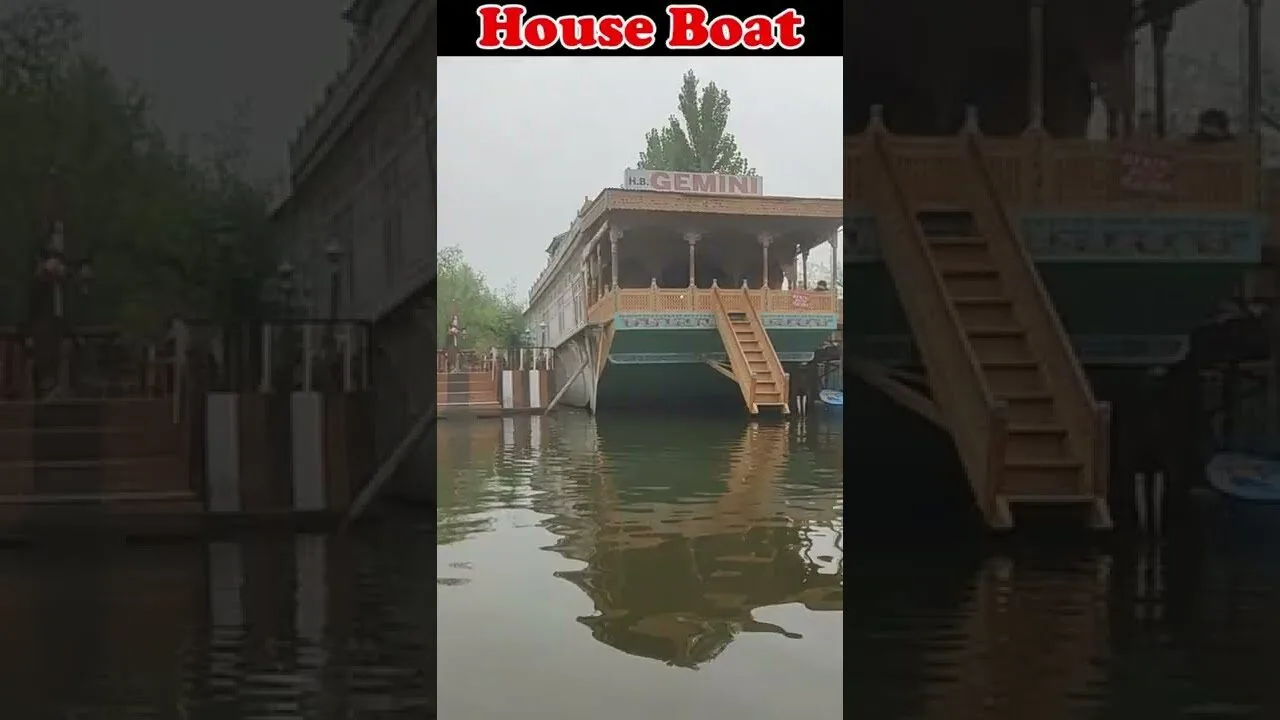

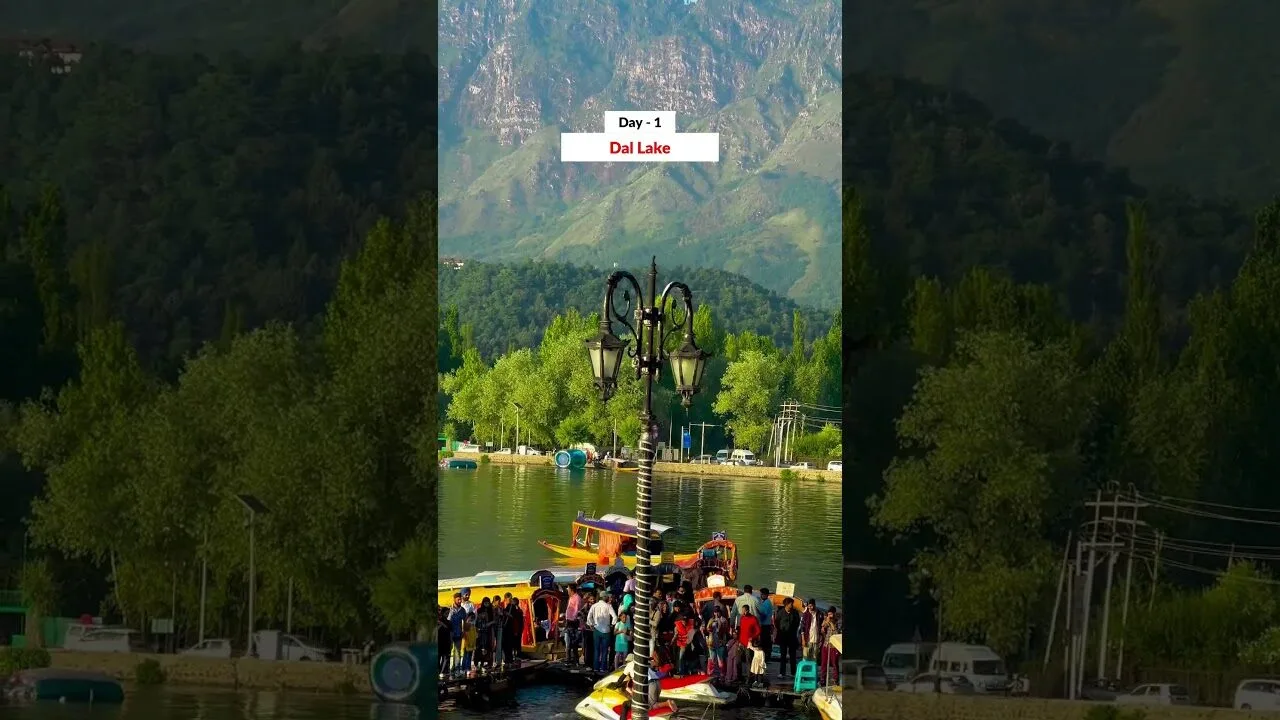
There are very few places on Earth as stunningly, achingly beautiful as Kashmir. The Mughal emperor Jahangir famously called it “Paradise on Earth,” and three centuries later, the description still holds with undiminished power. Dal Lake, with its iconic houseboats and intricately carved shikaras gliding across mirror-still waters at sunset, is one of the most photographed destinations in all of Asia. The snow-covered slopes of Gulmarg attract skiers from around the world and house one of the highest cable cars on the planet. The meadows of Pahalgam and Sonamarg are so impossibly green and vast that they look painted by an artist with an unlimited imagination. The ancient Mughal gardens of Srinagar — Chashme Shahi, Nishat Bagh, Shalimar Bagh — remain masterpieces of landscape architecture that rival anything in Persia or Central Asia.
And yet, Kashmir’s identity as a world-class tourist destination exists in painful, almost surreal contradiction with its identity as a conflict zone. For years, potential visitors were deterred by travel advisories, embassy warnings, and relentless headlines about violence and unrest. The tourism industry — which directly or indirectly employs over half the valley’s working population — suffered enormously and sustained damage that took years to repair. Hotel owners watched their properties decay and their bookings evaporate. Shikara operators sat idle for entire seasons, their boats gathering moss. Artisans saw their international markets disappear as buyers became too afraid to visit. The economic multiplier effect was devastating — when tourism suffers, everyone suffers, from the walnut farmer to the carpet weaver to the taxi driver to the chai vendor.
The irony is painful and profound: the very beauty that should have been Kashmir’s greatest asset and most reliable source of prosperity became obscured by the very conflict that was supposed to “liberate” the valley. Those who claimed to fight for Kashmir’s dignity and autonomy were, in fact, systematically destroying the very thing that made Kashmir unique, prosperous, and globally admired. Tourism is not just an industry in Kashmir — it is the lifeblood of the economy, the bridge between cultures, and the most powerful argument for peace that exists. Every tourist who visits Kashmir goes back as an ambassador for the valley, breaking the stereotypes perpetuated by media and propaganda, and carrying with them stories of warmth, beauty, and humanity that no headline can capture.
In recent years, there has been a remarkable and encouraging resurgence in Kashmiri tourism. Record numbers of tourists have visited the valley, with 2023 and 2024 seeing unprecedented footfall that surpassed all previous records. The G20 tourism working group meeting held in Srinagar in May 2023 was a powerful and symbolic statement of international confidence in Kashmir’s stability and potential. Bollywood films and web series have showcased Kashmir’s beauty to massive global audiences. The message is increasingly clear: Kashmir is open, Kashmir is beautiful, and Kashmir is ready to welcome the world with open arms and the legendary warmth of its people.
For travelers who have explored other beautiful corners of India — like the spiritual serenity of Rishikesh or the pristine, rain-drenched green landscapes of Cherrapunji — Kashmir offers something entirely different and altogether transcendent. It is not just a tourist destination; it is an experience that fundamentally transforms you. The warmth and generosity of the Kashmiri people, the extraordinary richness of their cuisine (a traditional wazwan feast is a culinary revelation that engages all the senses), and the sheer majesty of the landscape create memories that last a lifetime and stories that you will tell for years.
The Path Forward: Peace, Development, and Hope
The road ahead for Kashmir is neither short nor easy, but for the first time in decades, there is genuine reason for cautious, grounded optimism. The revocation of Article 370 was not a magic wand that would instantly solve all problems — no single policy decision could accomplish that for a region so complex and so scarred by history. But it was a necessary and long-overdue reset — a breaking of the old order that had kept Kashmir trapped in a self-reinforcing cycle of victimhood, violence, and political opportunism.

First, investment in education must be absolute and non-negotiable. The youth of Kashmir must have access to world-class education, not just within the valley but across India and the world. New IITs, IIMs, AIIMS, and universities must be established in the region. Scholarships, vocational training programmes, and digital learning infrastructure must be prioritized with the same urgency that was once reserved for military deployments. An educated, economically empowered youth is the strongest bulwock against radicalization and the most powerful engine for sustainable economic growth.
Second, economic development must be inclusive, rapid, and designed to benefit ordinary Kashmiris, not just outside investors. Industries that leverage Kashmir’s natural strengths — tourism, handicrafts, horticulture, saffron cultivation, walnut processing, and information technology — must be developed with urgency and vision. Special economic zones, improved air and road connectivity, reliable electricity, and streamlined regulations can transform the valley into an economic powerhouse. The youth who once picked up stones must be given the opportunity to pick up tools of progress instead.
Third, justice and reconciliation must be pursued with sincerity and compassion. The wounds of the past cannot be healed by pretending they do not exist or by declaring victory. The displaced Kashmiri Pandits deserve not just financial compensation but a genuine, heartfelt welcome back to their homeland, with security guarantees and community support. The families of those who disappeared during the conflict — the half-widows, the unclaimed dead — deserve answers, closure, and dignity. The victims of violence on all sides deserve acknowledgment, support, and a commitment that such horrors will never be repeated.
Fourth, the voices of ordinary Kashmiris must be amplified and centred in the discourse. For too long, the narrative about Kashmir has been controlled by politicians, separatists, propagandists, and armchair analysts — all of whom have their own agendas and none of whom have to live with the consequences of the narratives they spin. The real voice of Kashmir is the voice of the apple farmer in Shopian, the schoolteacher in Bandipora, the shikara owner on Dal Lake, the college student in Baramulla, the mother in Kulgam who just wants her children to be safe. Their aspirations are not complicated or unreasonable: they want peace, prosperity, good governance, and the freedom to live their lives without fear. They want what every human being on this planet deserves.
Peace is not merely the absence of conflict — it is the presence of justice, opportunity, dignity, and hope.
The struggles of Kashmir are multifaceted, deeply intertwined with historical, political, and religious complexities that defy simple solutions. It is crucial to distinguish between the Kashmiri people’s genuine aspirations for a better life and the manipulative actions of those who have systematically exploited them for personal and political gain. Regrettably, many Kashmiris fell victim to militants and politicians who operated under the guise of liberation while serving their own interests with breathtaking cynicism.
As Kashmir gradually embraces the opportunities brought forth by the revocation of Article 370 and 35A, the potential for peace, progress, and prosperity becomes increasingly evident and tangible. The emergence of new industries, the remarkable resurgence of tourism, the strengthening of democratic institutions at the grassroots level, the gradual return of Kashmiri Pandit families to the valley — these are not just policy outcomes or statistics in a government report; they are the building blocks of a new Kashmir, a Kashmir that the world deserves to see and the Kashmiri people deserve to experience.
It is time to move beyond the clutches of manipulation and division towards a future where Kashmiris can enjoy the same privileges, opportunities, and constitutional rights as their fellow countrymen. The mirage of oppression must be shattered once and for all, allowing Kashmir to truly flourish as a land of beauty, harmony, and boundless opportunity.
The Kashmir valley has endured enough suffering. Its people have sacrificed enough. Its beauty has been obscured for too long by the smoke of conflict and the fog of propaganda. The time has come to let Kashmir be what it was always meant to be — not a battleground for proxy wars, not a laboratory for political experiments, not a pawn on someone else’s chessboard, but a paradise on Earth where people live with dignity, dream without fear, and build a future worthy of their extraordinary resilience and their incomparable land.
Read Part 2: The Proxy War, The Propaganda, and The Path Ahead — covering the international dimensions, media warfare, Kashmiri Pandit exodus, Pakistan0027s internal reality, economic recovery, and stories of resilience.