Kashmir Part 2: The Proxy War, The Propaganda, and The Path Ahead
This is Part 2 of our deep dive into Kashmir. If you haven’t read Part 1, we covered the seeds of conflict sown in 1989, the exploitation of religion for political gain, the reign of opportunism, the hypocrisy of modern-day Mir Jaffers, the unmasking of manipulation, the staggering human cost, the revocation of Article 370, the tourism paradox, and the path forward. Now, we go deeper — into the machinery of proxy war, the propaganda ecosystem, the untold suffering, and the stories that deserve to be heard.
How Pakistan Ran This Proxy War
Let’s be absolutely clear about something: what happened in Kashmir was not a spontaneous uprising. It was not an organic freedom movement. It was a meticulously planned, state-sponsored proxy war, engineered by Pakistan’s Inter-Services Intelligence (ISI) and executed through a network of terror outfits that Pakistan continues to nurture on its soil.
The blueprint was drawn up in the late 1980s under the codename Operation Tupac — named after the 18th-century Peruvian revolutionary Tupac Amaru II, not the rapper. Launched in 1988 by then ISI chief Lieutenant General Hamid Gul, the operation had three clear objectives: foment large-scale insurgency in the Kashmir Valley, internationalize the Kashmir dispute, and bleed India through a thousand cuts. The strategy was documented, approved at the highest levels of Pakistan’s military establishment, and has been operational for over three decades.
Pakistan set up training camps across Azad Kashmir (PoK) and in Afghanistan — at Muzaffarabad, Kotli, Rawalpindi, and later in Khost and Jalalabad. Young men, many of them coerced, misled, or economically desperate, were trained in guerrilla warfare, weapons handling, and sabotage. The ISI armed them with AK-47 rifles, rocket launchers, and explosives. These men were then infiltrated across the Line of Control (LoC) into Indian-administered Kashmir.
The first major wave of infiltration began in the winter of 1989-1990. By 1990, the JKLF (Jammu and Kashmir Liberation Front) — initially a genuine political movement — had been effectively hijacked by Pakistan’s ISI, which began promoting more radical groups like Hizbul Mujahideen, Lashkar-e-Taiba (LeT), Harkat-ul-Mujahideen, and Jaish-e-Mohammed. The shift was deliberate: the ISI understood that a religiously motivated fighter was more dangerous and more pliable than a politically motivated one.
Lashkar-e-Taiba, founded in 1987 by Hafiz Saeed in Kunar province of Afghanistan with ISI patronage, became Pakistan’s primary instrument of terror in Kashmir. LeT operated from Muridke, near Lahore — a sprawling 200-acre complex that functioned openly as a “charity” despite being designated as a terrorist organization by the UN, US, EU, and India. Hafiz Saeed roamed free in Pakistan for years, even addressing public rallies, before his cosmetic arrest in 2019. The US placed a $10 million bounty on his head in 2012. He remained a free man in Pakistan.
Jaish-e-Mohammed, founded by Maulana Masood Azhar in 2000 with direct ISI backing after India released him in exchange for hostages during the 1999 IC-814 hijacking, carried out some of the most devastating attacks — including the 2001 Indian Parliament attack, the 2016 Pathankot airbase attack, and the 2019 Pulwama suicide bombing that killed 40 CRPF personnel.
Pakistan’s military establishment created a revolving door of terror groups. When one group faced international pressure, another was spawned under a new name. Harkat-ul-Mujahideen became Harkat-ul-Ansar became Harkat-ul-Mujahideen again. Jaish-e-Mohammed operatives resurfaced as “Tehreek-ul-Mujahideen.” The names changed. The handlers didn’t. The ISI’s Special Wing (also known as the “Kashmir Cell”) remained the central command, coordinating with the Pakistani Army’s 10 Corps and 12 Corps positioned along the LoC.
The proxy war has claimed over 47,000 lives since 1988, according to South Asia Terrorism Portal data — including approximately 7,000 Indian security personnel, 14,000 civilians, and over 23,000 terrorists. These are not abstract numbers. Each one represents a family destroyed, a future erased, a community scarred.
Key Incidents That Exposed Pakistan’s Hand
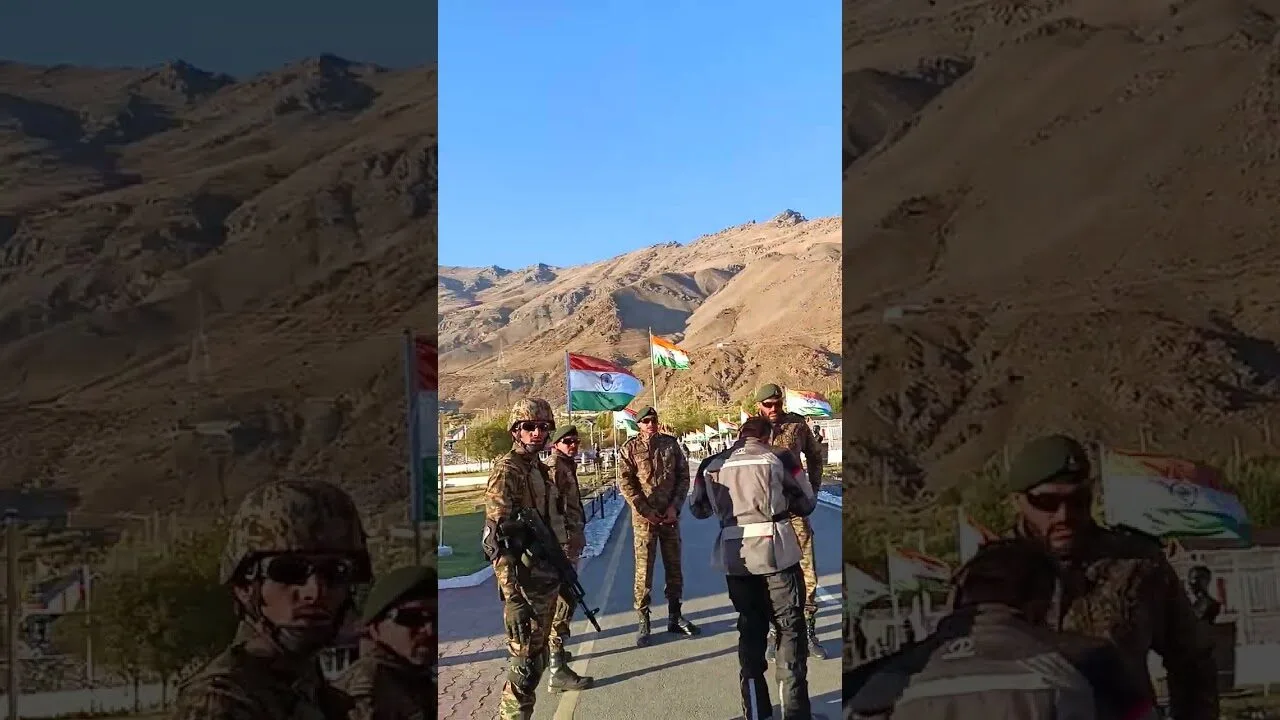
The Kargil War of 1999 was perhaps the most brazen Pakistani military adventure. Pakistani soldiers and Northern Light Infantry, disguised as “freedom fighters,” infiltrated across the LoC and occupied Indian positions in the Kargil sector. Pakistan’s Prime Minister Nawaz Sharif later admitted he was kept in the dark by Army Chief General Pervez Musharraf. The operation was planned by Musharraf and three other generals. After India’s decisive military response and intense international pressure — particularly from the US — Pakistan was forced to retreat. But the lesson was clear: Pakistan’s military would go to any length, even starting a conventional war, to keep Kashmir burning.
The 2001 Parliament attack on December 13 — where five Jaish-e-Mohammed and Lashkar-e-Taiba terrorists stormed the Indian Parliament complex in New Delhi — brought India and Pakistan to the brink of full-scale war. The attackers were equipped with AK-47s, grenades, and suicide vests. India mobilized nearly a million troops along the border in Operation Parakram. The world watched in horror as two nuclear-armed nations stared each other down.
The 26/11 Mumbai attacks of 2008 — carried out by 10 Lashkar-e-Taiba terrorists who arrived by sea from Karachi — killed 166 people, including foreign nationals. The lone surviving attacker, Ajmal Kasab, was a Pakistani national from Faridkot, Punjab. The plotting, training, and coordination were traced directly to LeT handlers in Pakistan, communicating via satellite phone and VoIP with their control room in Karachi. David Coleman Headley, an American of Pakistani origin, later confessed to scouting targets for LeT. Despite mountains of evidence, Pakistan’s response was denial, delay, and the theatrical arrest of a few low-level operatives.
The 2016 Uri attack on September 18, where four Jaish-e-Mohammed terrorists attacked an Indian Army brigade headquarters in Uri, killing 19 soldiers, prompted India’s surgical strikes across the LoC — a decisive military response that marked a paradigm shift in India’s approach. India’s Director General of Military Operations publicly announced the strikes, an unprecedented move that signaled New Delhi’s willingness to cross the threshold of conventional restraint.
The 2019 Pulwama attack on February 14 — a suicide car bombing by Adil Ahmad Dar, a local Jaish-e-Mohammed recruit, against a CRPF convoy — killed 40 personnel, the deadliest attack on Indian security forces in decades. India responded with Operation Bandar — airstrikes on a Jaish-e-Mohammed training camp in Balakot, deep inside Pakistani territory. This was the first time Indian aircraft struck mainland Pakistan since the 1971 war. Pakistan’s attempt at a retaliatory strike the next day resulted in the loss of one of its F-16s and the capture of Wing Commander Abhinandan Varthaman, who was later returned.
Each of these incidents followed the same pattern: Pakistan-based terror groups carry out a devastating attack, Pakistan denies involvement, the international community issues condemnations, Pakistan makes cosmetic arrests, and then quietly releases the accused. This cycle has repeated for over three decades.
The International Dimension
One of Pakistan’s most strategic moves was to internationalize the Kashmir dispute — to turn what was essentially a bilateral issue between India and Pakistan into a global concern. And for a long time, it worked.
The United Nations Security Council Resolution 47, passed on April 21, 1948, called for a plebiscite in Jammu and Kashmir. But the resolution also contained a precondition that Pakistan often conveniently forgets: Pakistan was required to withdraw all its forces and tribesmen from the territory first. Pakistan never complied. The plebiscite was never held. The UN Military Observer Group in India and Pakistan (UNMOGIP), established in 1949, continues to exist — but India has long maintained that its mandate lapsed after the 1972 Simla Agreement, which designated Kashmir as a bilateral issue.
Pakistan’s propaganda machinery at the United Nations has been relentless. Every year at the UN General Assembly, Pakistani leaders — from Zulfikar Ali Bhutto’s passionate speech in 1965 to Imran Khan’s 2019 address — raise Kashmir. Pakistan’s Permanent Mission to the UN has dedicated resources exclusively to Kashmir advocacy. Islamabad has hosted conferences, funded lobbying firms in Washington DC and Brussels, and cultivated relationships with human rights organizations sympathetic to its narrative.
But the narrative is shifting. In August 2019, when India revoked Article 370, Pakistan expected massive international condemnation. It didn’t come. Most countries, including the US, Russia, France, and the UAE, called it India’s internal matter. The Organization of Islamic Cooperation (OIC), usually a reliable ally of Pakistan on Kashmir, was divided — the UAE backed India’s position. China, while objecting to the creation of Ladakh Union Territory, stopped short of supporting Pakistan’s position on Kashmir.
The FATF (Financial Action Task Force) placed Pakistan on its “Grey List” from 2018 to 2022 for deficiencies in anti-money laundering and counter-terrorist financing. This was a massive diplomatic blow that Pakistan tried to spin, but the message was clear: the international community was no longer willing to ignore Pakistan’s role as a terror sponsor. Pakistan was removed from the Grey List only after making substantial compliance commitments, though skeptics question how deep the reforms went.
In 2020, the European Parliament debated a motion on Kashmir. The resolution that was eventually adopted called for dialogue but notably did not condemn India’s constitutional changes. This was a far cry from what Pakistan had hoped for.
The shift is also visible in the Middle East. The Abraham Accords normalized relations between Israel and several Arab states, and many of these nations — particularly the UAE, Bahrain, and Saudi Arabia — have deepened economic and strategic ties with India. The era of automatic Muslim-bloc solidarity with Pakistan on Kashmir is over. These nations now see India as a crucial economic partner and a counterbalance to China in the region.
Role of Media and Social Media
The Traditional Liberal Media Bias
For decades, sections of the international and Indian liberal media have been complicit — whether knowingly or through naivety — in amplifying Pakistan’s narrative on Kashmir. The framing has been consistently skewed: “Indian-administered Kashmir” is the default descriptor, while Pakistan-occupied Kashmir is rarely described as what it is — occupied territory. Terrorists are routinely called “militants,” “rebels,” or “fighters,” sanitizing the brutal reality of their actions.
Take the BBC. In 2019, the BBC faced intense criticism over its documentary “Kashmir: The Lost Paradise,” which was accused of whitewashing Pakistan’s role in fomenting violence. The documentary barely mentioned the ISI, cross-border terrorism, or the ethnic cleansing of Kashmiri Pandits. It framed the conflict almost entirely through the lens of Indian military excesses.
The New York Times published an opinion piece in 2019 by Pakistan’s then-Prime Minister Imran Khan titled “The World Can’t Ignore Kashmir.” It was published without a response from India or any balancing viewpoint. The op-ed was essentially free advertising for Pakistan’s position on an international platform with millions of readers.
The Guardian and Al Jazeera have similarly been accused of biased coverage. During the 2019 Article 370 revocation, both outlets gave disproportionate coverage to the communication blackout and detention of political leaders in Kashmir while largely ignoring the context — decades of Pakistan-sponsored terrorism that made such security measures necessary.
This is not to say that Indian security forces have never committed excesses. They have, and those instances should be investigated and prosecuted. But presenting the Kashmir conflict as a one-sided story of Indian oppression — without acknowledging Pakistan’s proxy war, the ethnic cleansing of Hindus, and the coercion of ordinary Kashmiris — is not journalism. It’s propaganda dressed up as reporting.
The Social Media Information War
If traditional media bias was a slow burn, social media has been a wildfire. Pakistan’s military establishment, particularly the ISI’s media wing, has invested heavily in information warfare on platforms like Twitter (now X), Facebook, Instagram, and YouTube.
The ISPR (Inter-Services Public Relations), the media wing of the Pakistani military, operates one of the most sophisticated state propaganda operations in South Asia. With over 8 million followers across social media platforms, ISPR produces polished content — high-quality videos, infographics, emotional narratives — designed to influence both domestic and international audiences. It regularly pushes anti-India content, glorifies terrorists killed in Kashmir as “martyrs,” and amplifies narratives of Indian atrocities, often with unverified or outright fabricated evidence.
Fake images have been a primary weapon. During the 2019 Kashmir crisis, viral images on social media showed supposedly brutalized Kashmiri protesters. Investigation by fact-checkers revealed that many of these images were from Syria, Iraq, Palestine, and even Bangladesh — recycled and repurposed to stoke outrage. A viral image of a woman being assaulted by soldiers was traced to a 2013 protest in Egypt. Another showed a child in a devastated landscape — it was from the Syrian civil war. The sheer volume of such misinformation made correction nearly impossible once the images had been shared millions of times.
In 2020, the EU DisinfoLab published a devastating investigation titled “Indian Chronicles” — which actually exposed a vast network of fake media outlets, NGOs, and think tanks designed to amplify anti-Pakistan content. But Pakistan’s own disinformation networks are equally vast. Researchers at the Atlantic Council’s Digital Forensic Research Lab have documented coordinated inauthentic behavior from Pakistani military-linked accounts targeting Indian narratives on Kashmir.
Hashtag campaigns like #FreeKashmir, #StandWithKashmir, and #KashmirUnderSiege are routinely amplified by bot networks and paid influencers. When checked, many of these accounts have no real profile photos, were created in batches, and tweet exclusively about Kashmir. Pakistan has also reportedly funded social media influencers in Europe and North America to keep Kashmir trending in Western discourse.
The result is that an average person scrolling through their feed in London or New York sees a distorted picture — one where India is always the oppressor and Pakistan’s role is invisible. This is information warfare, and Pakistan has been winning it for years.
A Message to the Promoters of This Propaganda
To the journalists who frame terrorists as freedom fighters: you are not doing journalism. You are providing intellectual cover for mass murder. When you call Hafiz Saeed a “cleric” instead of the terror mastermind he is, when you describe the Pulwama bomber as a “young man driven to desperation” instead of a Jaish-e-Mohammed operative, you insult the 40 families who lost their fathers, sons, and husbands.
To the social media influencers who share unverified images from conflict zones and tag them “Kashmir”: you are not raising awareness. You are spreading disinformation. Verify before you amplify. The two minutes it takes to reverse-search an image could save you from becoming a willing pawn in Pakistan’s information war.
To the Western human rights organizations that issue reports on Kashmir without visiting the region or without acknowledging Pakistan’s role: your credibility is on the line. Amnesty International, Human Rights Watch — your reports are quoted in Pakistani media and at the UN as evidence of Indian oppression. When you fail to provide context, you become tools in a propaganda machine. Balance is not neutrality — it’s honesty.
No Militants, Only Terrorists
Let’s address the elephant in the room: the language we use matters. For too long, the international media, human rights organizations, and even some Indian commentators have used the word “militant” to describe armed men who cross into India from Pakistan, kill civilians, attack security forces, and wage war against the Indian state.
A militant is someone who is combative or aggressive in support of a cause. A terrorist is someone who uses violence and fear, especially against civilians, for political aims. What happens in Kashmir is not militancy. It is terrorism — pure, undiluted, state-sponsored terrorism.
When terrorists gun down innocent Kashmiri villagers — like the 2018 Wandhama massacre where 23 Kashmiri Pandits were killed, or the 2000 Chattisinghpora massacre where 36 Sikhs were lined up and shot, or the 2022 Rajouri attack where terrorists entered two homes and killed seven civilians including two children — these are not acts of militancy. These are acts of terrorism. Calling them anything else is an insult to the victims and their families.
When terrorists throw grenades at crowded markets in Srinagar, when they attack school buses, when they assassinate political leaders, journalists, and civilians who refuse to support their cause — this is terrorism. The distinction is not semantic. It is fundamental. Words shape narratives, and narratives shape policy. By sanitizing terrorism as “militancy,” the international community has, for decades, given Pakistan a free pass.
The Indian government officially designates these groups as terrorist organizations — and so does the United Nations. Lashkar-e-Taiba, Jaish-e-Mohammed, Hizbul Mujahideen — all are on the UN Security Council’s consolidated list of terrorist entities. The US State Department’s list of Foreign Terrorist Organizations includes LeT and JeM. The European Union has designated them as well. Yet somehow, when these very same groups operate in Kashmir, the language softens. That is not an accident. That is a feature of Pakistan’s propaganda strategy.
The Untold Stories of Kashmiri Pandits in Exile
In Part 1, we touched upon the human cost. But the exodus of Kashmiri Pandits deserves its own chapter — because what happened in January 1990 was not just displacement. It was ethnic cleansing, one of the most underreported in modern history.
On the night of January 19, 1990, mosques across the Kashmir Valley blared threatening slogans from loudspeakers: “Kashmir mein agar rehna hai, Allah-o-Akbar kehna hai” (If you want to stay in Kashmir, you must say Allah-o-Akbar), “Yahan kya chalega, Nizam-e-Mustafa” (What will rule here, Islamic law), “Zalmo, roko, bahar jalo” (Men, stop, flee from here). The message was unambiguous. The target was clear. Kashmiri Pandits — the indigenous Hindu minority of the valley — were being told to leave, convert, or die.
Over the following weeks and months, approximately 100,000 to 140,000 Kashmiri Pandits fled their ancestral homeland. They left behind homes, businesses, temples, and centuries of heritage. Many had only the clothes on their backs. The exodus was not organized by any government — it was a panicked flight driven by fear after targeted killings. Prominent Pandit leaders, intellectuals, and ordinary citizens were assassinated to send a message.
Tika Lal Taploo, a prominent lawyer and BJP leader, was shot dead outside his home in Srinagar on September 14, 1989. Nilakanth Ganjoo, a retired judge, was killed on November 4, 1989. Sarwanand Premi, a 70-year-old poet and his son were kidnapped, tortured, and killed in May 1990. Lassa Koul, director of Doordarshan Srinagar, was shot in February 1990. Each killing was designed to terrorize the community into submission or flight. Flight is what happened.
The refugee camps in Jammu were a study in human degradation. Approximately 39,000 registered migrant families — over 150,000 individuals — were housed in transit camps at places like Muthi, Purkhoo, Mishriwala, Nagrota, and later Jagti. These camps were initially just tent colonies. Families of five or six lived in spaces meant for one. Sanitation was abysmal. Healthcare was minimal. Children grew up in these camps, studied under tin roofs, and carried the trauma of displacement throughout their lives.
The psychological toll was perhaps even worse than the physical conditions. Kashmiri Pandits lost not just their homes but their entire cultural universe — their temples, their festivals, their language (Kashmiri), their connection to the land their ancestors had lived on for 5,000 years. The concept of “Kashmiriyat” — the supposedly syncretic culture of Kashmir that liberals love to romanticize — died the night the Pandits were driven out. A culture that cannot protect its minorities is not syncretic. It is failed.
The economic devastation was staggering. Pandit families lost properties worth billions. Hindu temples — over 400 temples in the valley — were desecrated, looted, or destroyed. The famous Shankaracharya Temple in Srinagar was attacked. The Martand Sun Temple, a UNESCO heritage site candidate, was vandalized.
Three decades later, the return of Kashmiri Pandits remains a distant dream. Government schemes like the Prime Minister’s Development Package (PMDP) announced in 2015 earmarked ₹80,000 crore for J&K’s development, including provisions for return and rehabilitation of Pandits. A scheme offering 6,000 government jobs and accommodation for returning Pandit families saw only a few hundred takers. The fear persists. The recent targeted killings of Kashmiri Pandits — including Rahul Bhat, a government employee shot dead in his office in Budgam in May 2022, and Purshotam Kumar, shot in Anantnag in October 2022 — have reinforced the community’s reluctance to return.
India has, in recent years, been building dedicated townships for returning Pandits — like the one in Sheikhpora, Budgam with 200 flats and secure perimeters. But many in the community ask a legitimate question: is living in a fortified compound, surrounded by security, really “returning home”? The answer, for most, is no.
Pakistan’s Internal Reality — The Distraction Called Kashmir
Pakistan’s obsession with Kashmir has always served one primary purpose: distracting its own people from the catastrophic failures of the Pakistani state. Nothing unites a fractious nation like a shared external enemy, and no external enemy serves Pakistan’s military establishment better than India on Kashmir.
Consider Pakistan’s own record on the territories it controls. Balochistan, Pakistan’s largest province by area and richest in natural resources (gold, copper, natural gas), has been subjected to what human rights organizations describe as a slow-motion genocide. The Human Rights Commission of Pakistan (HRCP) has documented widespread enforced disappearances, extrajudicial killings, and suppression of political dissent in Balochistan. In April 2025, UN human rights experts expressed “serious concern over the excessive and harmful impacts of Pakistan’s counter-terrorism measures in Balochistan.” The Baloch Yakjahti Committee and organizations like Paank have documented hundreds of cases of enforced disappearances and custodial deaths.
Gilgit-Baltistan, the part of Kashmir under Pakistani control, has no constitutional status in Pakistan. It is governed through executive orders, its people have no representation in Pakistan’s Parliament, and its natural resources are exploited without local benefit. When the people of Gilgit-Baltistan protest — as they did in 2022 and 2023 against high electricity bills, price hikes, and lack of representation — they are met with batons, tear gas, and arrests.
Pakistan-occupied Kashmir (so-called “Azad Kashmir”) is neither azad (free) nor Kashmir in the way Pakistan pretends. The Interim Constitution of AJK (1974) explicitly states that no person or political party in Azad Kashmir can challenge Pakistan’s sovereignty over the territory. The area is ruled through the Kashmir Council, which is chaired by the Prime Minister of Pakistan. The people of PoK have no real autonomy. Their political leaders who dare to demand genuine independence or integration with India — like Arif Shahid, a prominent PoK political activist who was assassinated in Rawalpindi in May 2013 — are silenced permanently.
Economically, Pakistan is in dire straits. In 2023, Pakistan secured a $3 billion IMF bailout to avoid default. Its inflation rate soared above 30%. Foreign reserves plummeted to levels barely covering a few weeks of imports. The Pakistani rupee went into freefall. Energy shortages became routine — with some areas facing 12 to 16 hours of load-shedding daily. Yet the Pakistani military, which controls an outsized share of the national budget, continues to prioritize its nuclear arsenal, its India-focused conventional military, and its Kashmir-related expenditures over the welfare of its own citizens.
Pakistan’s Internal Security situation is itself in crisis. The Tehrik-i-Taliban Pakistan (TTP) has regrouped and carried out devastating attacks in Khyber Pakhtunkhwa. Baloch separatist groups have escalated attacks on infrastructure and security forces. Sectarian violence between Sunni and Shia communities continues. In 2023-2024, terrorist violence in Pakistan increased, with the US State Department’s 2024 Human Rights Report documenting hundreds of casualties from terrorist attacks, particularly in Khyber Pakhtunkhwa and Balochistan.
Yet Pakistan’s response to all of this is to point fingers at India and scream “Kashmir.” It is the ultimate political deflection — a magician’s trick where the audience is directed to look at one hand while the other picks their pocket. The Pakistani people deserve better. Their resources are being squandered on a proxy war that has brought them nothing but international isolation, economic ruin, and internal instability.
The Economic Drain — What Kashmir Lost

Three decades of conflict have devastated what was once one of the most beautiful and economically promising regions in South Asia. The numbers are staggering.
Kashmir’s economy, traditionally driven by agriculture (saffron, apples, walnuts), horticulture, handicrafts (Pashmina shawls, papier-mâché, wood carving), and tourism, has been bled dry. According to various estimates, the conflict has cost Jammu and Kashmir over $100 billion in lost economic output since 1989. Tourism, which was the backbone of the local economy, has been repeatedly disrupted by violence and curfews. The pilgrimage tourism sector — Amarnath Yatra and Mata Vaishno Devi — has also suffered from security concerns.
The saffron industry tells its own tragic story. Kashmir once produced over 90% of India’s saffron. The area under saffron cultivation has declined from over 5,700 hectares in the 1990s to approximately 3,000 hectares. Production plummeted from around 15-16 metric tonnes per year to barely 2-3 tonnes. Climate change, lack of irrigation, and above all, the conflict-driven neglect of agricultural infrastructure, have devastated this centuries-old industry. The National Saffron Mission, launched in 2010-11 with an outlay of ₹371 crore, has had limited impact.
The handicrafts sector — which employed hundreds of thousands of Kashmiri artisans and was a major export earner — has been crippled. Many artisans migrated to other parts of India. Orders from international buyers dried up due to Kashmir’s association with conflict. The famous Pashmina industry, which once commanded premium prices globally, has been undercut by machine-made imitations from China and a shrinking pool of skilled artisans.
Unemployment in Jammu and Kashmir has consistently been among the highest in India. According to the Periodic Labour Force Survey (PLFS) 2022-23, J&K’s unemployment rate stood at around 10-12%, significantly higher than the national average. For educated youth, the situation is even grimmer — with graduate unemployment rates exceeding 20%. This economic despair is exactly what Pakistan’s ISI exploits to recruit new cadres. Poverty and idleness are the fertile soil in which terrorism grows.
Since the revocation of Article 370 and the reorganization of Jammu and Kashmir as a Union Territory in 2019, there have been signs of economic recovery. The government has pushed for industrial investment — new industrial estates, improved road connectivity (tunnels like the Banihal-Qazigund tunnel reducing travel time), and expansion of the railway network into the valley. The Udhampur-Srinagar-Baramulla rail link, a project decades in the making, is nearing completion and promises to revolutionize connectivity. Record tourist arrivals — over 1.88 crore tourists in 2022, the highest ever — signal renewed confidence in Kashmir’s potential as a tourism destination. For those planning to explore India’s incredible destinations, Kashmir stands alongside places like Rishikesh, the yoga capital of the world, as must-visit locations that showcase India’s cultural and natural wealth.
But the recovery is fragile. It depends on sustained security, continued investment, and above all, the dismantling of the terror infrastructure that Pakistan continues to operate from across the border. One major terrorist attack can undo years of progress in tourism and investor confidence.
Stories of Resilience — Kashmiris Who Defied the Odds
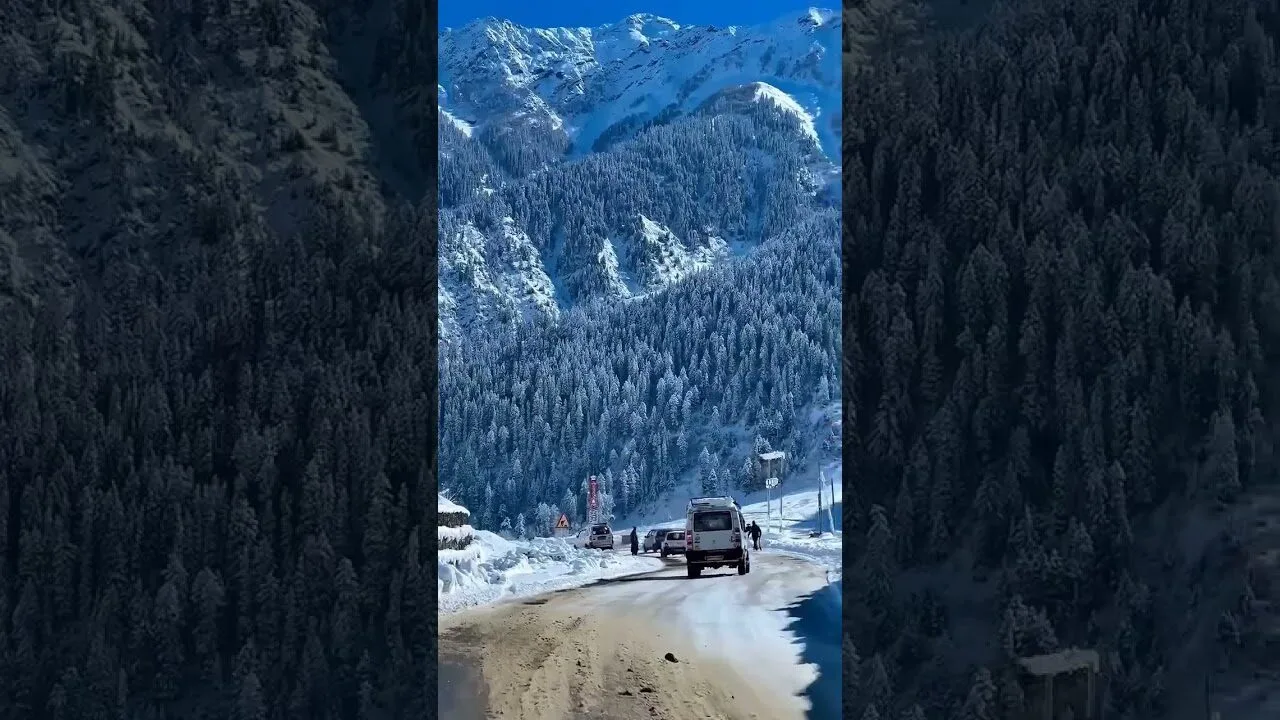
Amid the darkness, stories of extraordinary resilience shine through. Kashmir has produced remarkable individuals who chose hope over hate, achievement over violence, and contribution over destruction.
Shah Faesal became the first Kashmiri to top the Indian Civil Services Examination in 2009. His story inspired a generation of Kashmiri youth to aspire to serve the nation through administrative service. While his subsequent political journey has been controversial, his achievement as a young man from a remote village in Kupwara topping the UPSC remains a powerful symbol of what is possible.
Parvez Rasool became the first cricketer from Kashmir to be selected for the Indian national cricket team in 2014. In a valley where stone-pelting and gun-battles made daily headlines, Rasool’s selection for the India A team and later the national squad showed Kashmiri youth that the path to glory lay not through violence but through excellence. He went on to captain Jammu and Kashmir in domestic cricket and became a role model for thousands of aspiring cricketers in the valley.
Shahid Ahmad Lone, a young cricketer from Srinagar who played for J&K’s under-19 and under-23 teams, was shot dead by terrorists in 2020. His crime? Playing cricket — a sport that the terrorists consider “un-Islamic” and a betrayal of their cause. Shahid’s death was a reminder that the terrorists fear not just the Indian state, but the normalization of life in Kashmir. If young Kashmiris are playing cricket, getting educated, building businesses — who needs the gun?
Kashmiri entrepreneurs have been quietly building businesses despite the odds. The Kashmir valley’s apple industry is worth over ₹8,000 crore annually and is the backbone of the rural economy. Young entrepreneurs are leveraging e-commerce to sell Kashmiri saffron, honey, handicrafts, and dry fruits directly to consumers across India and abroad. Startups like Kashmir Box, founded by young Kashmiri entrepreneurs, have brought Kashmir’s artisanal products to national and international markets through online platforms.
Irfan Shah, a young doctor from Srinagar, gained national recognition during the COVID-19 pandemic for his tireless work in setting up testing and vaccination centers in remote areas of the valley, often working in areas where terrorists had warned health workers to stay away. Healthcare workers in Kashmir have faced threats from terrorists for decades — yet they continue to serve.
Kashmiri women have been at the forefront of resilience. Shah Bano (name changed for security), a school teacher in Kupwara, continued teaching in her village school even after receiving threats from militants. She told a journalist, “If I stop teaching, they win. My students need to know that education is their weapon against those who want to keep them in darkness.” This sentiment, shared by thousands of Kashmiri teachers, healthcare workers, and social workers, is the true spirit of Kashmir — not the gun-wielding terrorist hiding in the mountains.
For travelers who have witnessed the warmth of Kashmiri hospitality firsthand, the contrast between the media narrative and the reality on the ground is stark. Just as visitors to Cherrapunji, India’s pristine paradise in Meghalaya, discover a world far richer than headlines suggest, those who visit Kashmir find a land of extraordinary beauty, generous people, and a culture struggling — but determined — to reclaim its future.
How We Need to Act
The time for passivity is over. Here is what needs to happen — not in some distant future, but now:
- Zero tolerance for terrorism: India must maintain its policy of decisive military response. Surgical strikes, airstrikes, and targeted operations must remain on the table. The message to Pakistan must be unambiguous: every act of terror will exact a price higher than the terrorists can bear.
- Dismantle the terror infrastructure: India must continue to apply diplomatic pressure, through forums like FATF, to ensure Pakistan’s terror financing networks are exposed and shut down. Naming and shaming is not enough — follow-through with economic sanctions is essential.
- Invest in Kashmir’s youth: The single most effective counter to terrorism is opportunity. Education, jobs, sports facilities, IT parks — these are the real weapons against radicalization. Every Kashmiri youth who has a job and a future is one less recruit for the ISI.
- Support the return of Kashmiri Pandits: This is not just a matter of justice — it is a matter of India’s civilizational identity. The return must be safe, dignified, and sustainable. Fortified compounds are not homes. The government must create conditions where Pandits can return to their original neighborhoods, not just to isolated settlements.
- Counter Pakistan’s information war: India needs a robust, coordinated counter-narrative strategy on social media. This means investing in fact-checking, exposing Pakistani disinformation in real-time, and telling the stories of Kashmiri victims that the international media ignores.
- Economic integration: The full integration of Jammu and Kashmir with the Indian economy — through improved connectivity, industrial investment, and tourism promotion — must be accelerated. The fruits of development must reach every district, not just Srinagar and Jammu.
- Hold the media accountable: Both international and domestic media that sanitize terrorism, spread disinformation, or present a one-sided narrative must be called out. Media literacy campaigns must be conducted to help people identify and reject propaganda.
Some Facts About Kashmir
For those who still need convincing, here are some hard facts:
- Area: Jammu and Kashmir (Indian-administered) covers approximately 222,236 sq km, including the territories of Ladakh (created as a separate Union Territory in 2019).
- Population: J&K has a population of approximately 12.5 million (2011 Census). Ladakh has approximately 2.7 lakh people.
- Kashmiri Pandit exodus: Approximately 100,000-140,000 Pandits fled the valley in 1990. Only around 800-1,000 remain today.
- India’s military presence: At peak, India had approximately 600,000-700,000 security personnel in J&K — a number often cited by Pakistan as evidence of “occupation.” What Pakistan doesn’t mention is that these forces are deployed to counter Pakistan’s cross-border terrorism, not to suppress a civilian population.
- Pakistan-occupied Kashmir: Pakistan controls approximately 78,114 sq km of the former princely state of Jammu and Kashmir, including Gilgit-Baltistan and so-called “Azad Kashmir.” China controls approximately 37,555 sq km (Aksai Chin and Shaksgam Valley, ceded by Pakistan to China in 1963).
- Terrorist casualties: Since 1988, over 23,000 terrorists have been killed in J&K. Over 5,000 Indian security personnel have made the supreme sacrifice. Thousands of civilians have died.
- Elections: Jammu and Kashmir has held multiple free and fair elections — in 1996, 2002, 2008, 2014, and most recently the 2024 Assembly elections which saw record voter turnout of over 60%, defying boycott calls from separatists and terrorist groups.
A New Morning in Kashmir — A Poem
The valley wakes to a different light,
Where once the guns roared through the night,
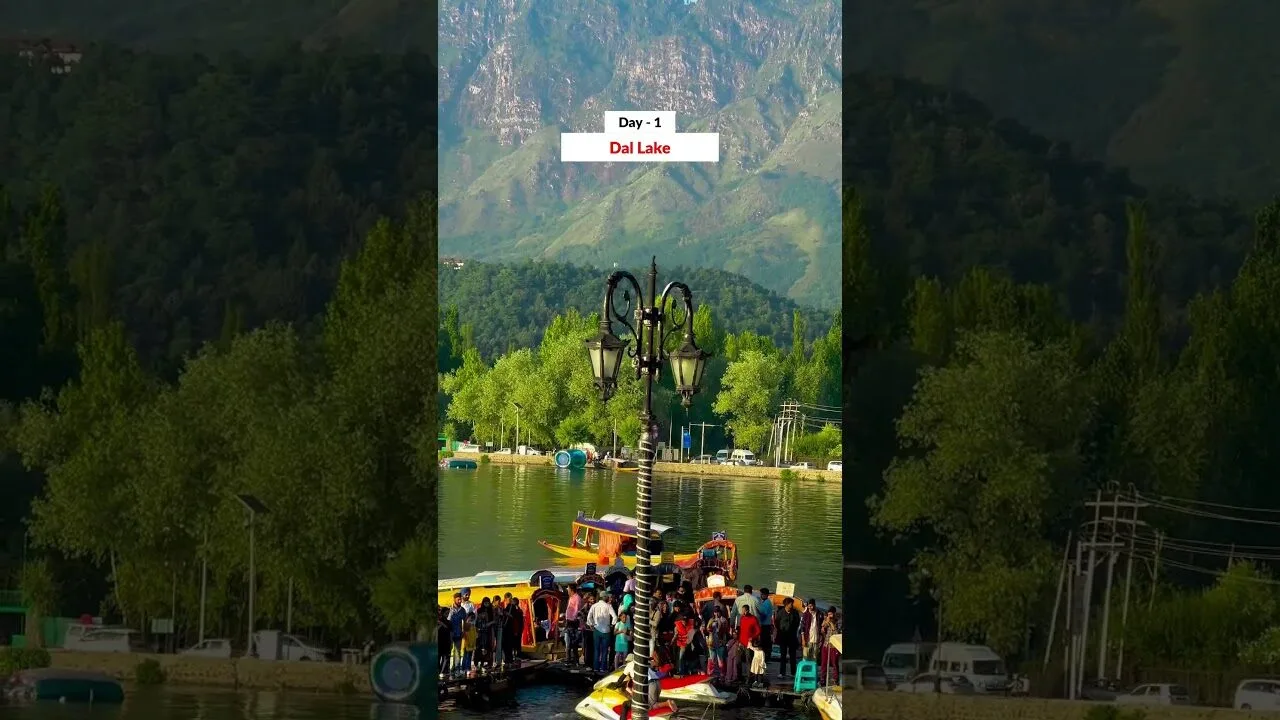
The Dal Lake shimmers, calm and wide,
And children play where fear once hides.The almond blossoms dare to bloom,
Dispelling three decades of gloom,
A chinar stands, its branches spread,
Over the living, honoring the dead.The shikaras glide on gentle streams,
The muezzin’s call and temple bells,
Both rise together, side by side,
Where once they were forced apart by pride.A Pandit returns to ancestral land,
A Muslim neighbor takes his hand,
No gun between them, only grace,
The warmth of home on every face.The saffron fields turn gold again,
The Pashmina weaver’s loom spins plain,
The apple orchards heavy bend,
As healing comes, slow but to no end.This is not paradise regained —
Too much was lost, too much remains
Unspoken grief, uncounted scars,
But now, at least, the morning stars
No longer weep for Kashmir’s plight,
They guide the valley toward the light.
Looking Ahead — Tying It All Together
Across these two parts, we have traced Kashmir’s tragic arc — from the seeds of conflict planted in 1989, through decades of Pakistan’s proxy war, media manipulation, and human suffering, to the fragile but real signs of recovery today. The story of Kashmir is ultimately not just about geopolitics or terrorism. It is about human resilience in the face of sustained, state-sponsored cruelty.
Pakistan’s proxy war has failed in its objective. Kashmir did not rise up. The people of Kashmir, by and large, rejected the gun. They voted in elections. They sent their children to school. They rebuilt their lives, again and again, after every terror attack. The resilience of the Kashmiri people — Pandit and Muslim alike — is the most powerful refutation of Pakistan’s narrative.
The revocation of Article 370 in 2019 was a watershed moment — not because it solved everything overnight, but because it signaled India’s commitment to full integration rather than managed ambiguity. The constitutional change, controversial as it was, opened the door to the same rights, protections, and opportunities that citizens in other parts of India take for granted. The record tourist arrivals, the completion of infrastructure projects, the investment flows — these are early returns on that decision.
But the road ahead is long. Pakistan’s terror infrastructure remains intact across the border. The ISI continues to recruit, train, and infiltrate. The information war on social media shows no signs of abating. The return of Kashmiri Pandits remains an unfinished promise. Economic recovery, while encouraging, has not yet reached every village and every household.
What Kashmir needs — and deserves — is a sustained decade of peace, investment, and justice. Peace from across the border. Investment in its people and its potential. Justice for the victims of terrorism, for the displaced Pandits, and for the ordinary Kashmiris caught between the gun and the state.
The new morning in Kashmir is not yet fully dawned. But for the first time in three decades, the sky is brightening. And that, in itself, is a victory worth celebrating.
This concludes Part 2 of our Kashmir series. Read Part 1 here.