There’s a Bridge, and on the Other Side Is Home
Imagine standing at a gate, peering across a narrow strip of land into another country — not as a tourist, not as a diplomat, but as a pilgrim coming home. For over 72 years, that gate remained shut. Families torn apart by the 1947 Partition could only gaze at the faint white dome of Gurdwara Darbar Sahib Kartarpur from the Indian side, close enough to see it with their own eyes but impossibly far from touching it. Grandparents told their grandchildren about the place where Guru Nanak Dev Ji spent the last 18 years of his life. Stories passed down like heirlooms — precious, painful, and seemingly frozen in time.
Then, on 9 November 2019, the Kartarpur Corridor opened. And overnight, what felt like an impossible dream became a simple walk across a 4.2-kilometre road. No passport stamping, no visa interviews, no bureaucratic labyrinth. Just you, your faith, and a path that had been waiting for decades to be walked again.
Whether you’re a devout Sikh, a history enthusiast, or simply someone who believes that bridges matter more than walls — this guide is for you. It’s everything I wish someone had handed me before my own visit: practical, emotional, and brutally honest about what to expect.
A Brief History of Kartarpur Sahib
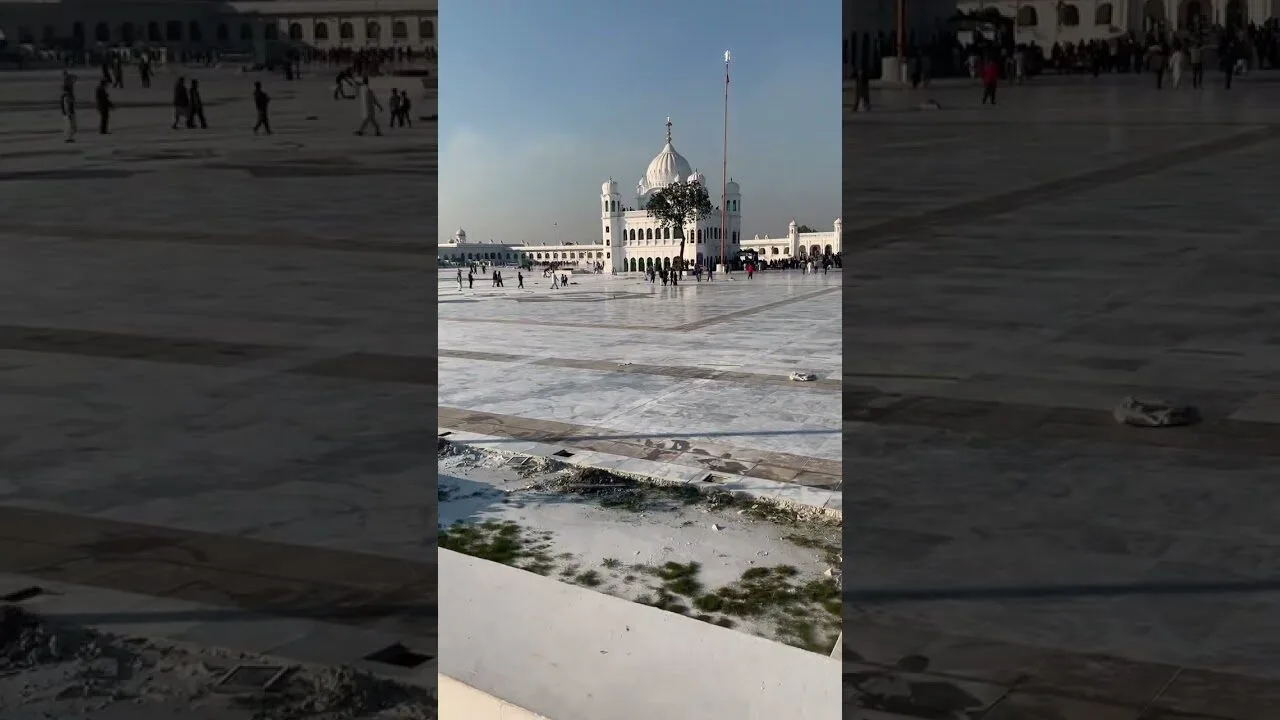
Kartarpur holds a significance that is hard to overstate in Sikh history. After years of travels — his udasis — across India, Tibet, the Middle East, and beyond, Guru Nanak Dev Ji, the founder of Sikhism, settled in Kartarpur (in present-day Narowal District, Punjab, Pakistan) around 1522. He lived here for approximately 18 years, tending to fields, composing hymns that would later become part of the Guru Granth Sahib, and building a community grounded in equality, honest labour, and devotion.
The Gurdwara Darbar Sahib that stands today was built on the very site where Guru Nanak Dev Ji breathed his last in 1539. It is here that the Angitha Sahib — the cremation site — and the nearby Bara Dari (the room where his body rested) remain sacred spaces. For Sikhs worldwide, visiting Kartarpur is not merely tourism; it is a spiritual homecoming — tracing the final footsteps of the first Guru.
After Partition in 1947, Kartarpur fell on the Pakistani side of the border, just 4 km from the Indian village of Dera Baba Nanak in Gurdaspur district. Despite its proximity, visiting became nearly impossible for most Indian Sikhs. Occasional diplomatic visits and rare permits existed, but for the common devotee, Kartarpur remained a distant dream — visible from the Indian side but unreachable.
The Kartarpur Corridor: A Dream Realised
The idea of a corridor linking Dera Baba Nanak to Kartarpur Sahib had been proposed multiple times over the decades. It was finally realised in 2019, when both India and Pakistan agreed to build a visa-free passage. The corridor was inaugurated on 9 November 2019 — the 550th birth anniversary of Guru Nanak Dev Ji and, poignantly, the 30th anniversary of the fall of the Berlin Wall.
The corridor allows Indian nationals and Persons of Indian Origin (PIOs) to visit the gurdwara without a Pakistani visa. Instead, pilgrims obtain a Electronic Travel Authorisation (ETA) through a dedicated online portal. The journey across the corridor itself takes roughly 20-30 minutes, traversing a floodplain and culvert bridge over the Ravi River.
“I could see the gurdwara from my hotel window in Dera Baba Nanak. It was so close, yet so far. When the corridor opened, I wept.” — A first-time pilgrim from Amritsar
How to Reach Kartarpur
Getting to Dera Baba Nanak (Indian Side)
Dera Baba Nanak is the last Indian stop before the corridor. It’s well-connected by road and rail:
- By Air: The nearest airport is Sri Guru Ram Dass Jee International Airport, Amritsar (ATQ), roughly 50 km away. From Amritsar, hire a taxi or take a bus to Dera Baba Nanak (1.5-2 hours).
- By Train: Dera Baba Nanak has its own railway station with connections to Amritsar, Pathankot, and Jalandhar. From Amritsar, several passenger and express trains run daily (approx. 2-2.5 hours).
- By Road: Regular buses and private taxis ply between Amritsar and Dera Baba Nanak via Batala. The road journey takes about 1.5-2 hours depending on traffic.
Crossing the Corridor
Once at the Integrated Check Post (ICP) on the Indian side at Dera Baba Nanak, pilgrims undergo security screening, present their ETA, and then walk or take a shuttle bus across the corridor to the gurdwara on the Pakistani side. The entire process — from entering the ICP to stepping into the gurdwara complex — typically takes 1-2 hours depending on crowd size.
Booking Guide: The ETA Process
The Electronic Travel Authorisation (ETA) is your golden ticket. Here’s how to get it:
- Visit the portal: Go to prakashpurb550.mha.gov.in (the official Indian government portal for Kartarpur Sahib pilgrimages).
- Register: Create an account with your passport details, photograph, and personal information.
- Apply: Fill out the ETA application form. You’ll need to select your preferred date of visit (up to 7 days in advance is recommended, though sometimes same-day slots are available).
- Pay the fee: The fee is USD 20 (or equivalent in INR, approximately ₹1,500-1,700) payable online.
- Receive confirmation: Approved ETAs are typically confirmed within 24-48 hours. You’ll receive a confirmation email with a QR code.
- Print and carry: Carry a printed copy of your ETA along with your original passport to the ICP.
Important notes:
- At least 4-5 days advance booking is recommended, especially during Guru Nanak Jayanti and other gurpurabs when demand surges.
- Passport validity should be at least 6 months from the date of travel.
- Group bookings (for families or jathas) are supported on the portal.
- Indian citizens, OCI cardholders, and PIOs are eligible. Foreign nationals of other countries need to check the latest rules, as regulations have evolved.
What to Expect at the Gurdwara
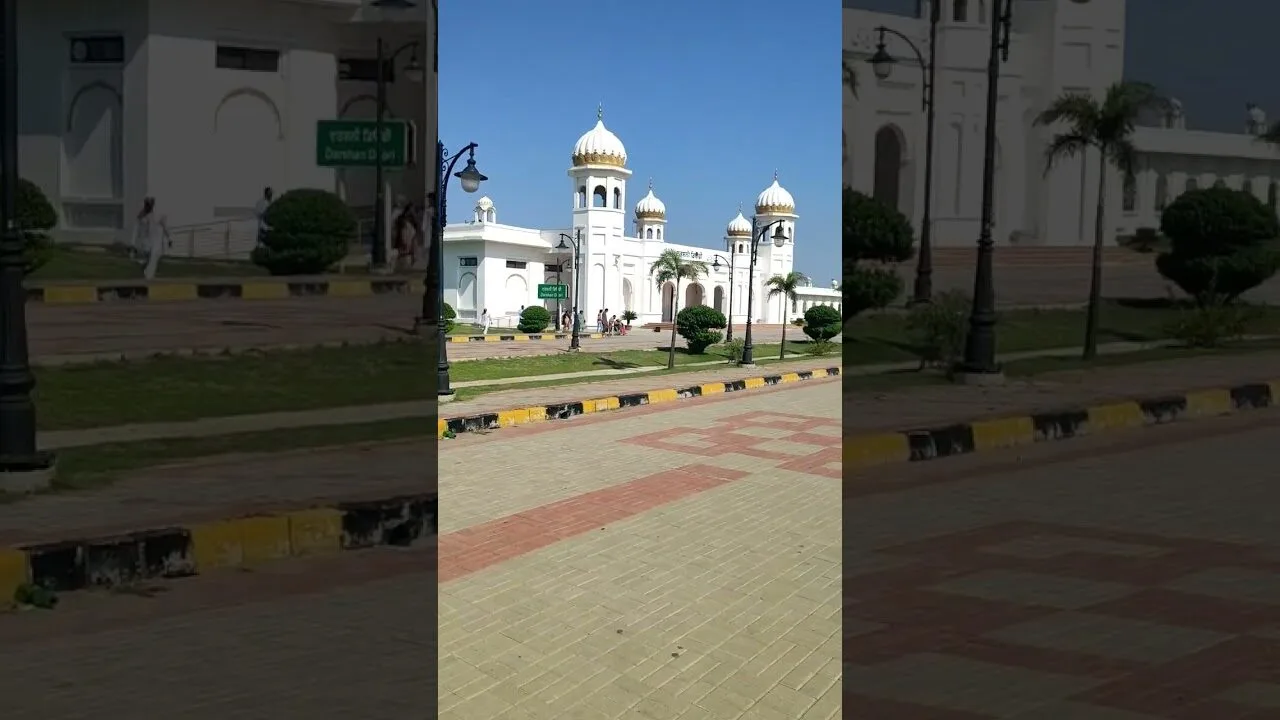
Stepping into the Gurdwara Darbar Sahib Kartarpur complex is an experience that words barely do justice. The gurdwara is set amidst manicured gardens, reflecting pools, and wide walkways. The main building features pristine white marble, frescoes, and the unmistakable dome that Sikhs have described as “the one I could see but never reach” for decades.
The Main Complex
- Darbar Sahib (Main Hall): The sanctum sanctorum houses the Guru Granth Sahib Ji. Devotees offer prayers, listen to kirtan (devotional singing), and pay their respects. The atmosphere is deeply spiritual, amplified by the knowledge of the site’s historical significance.
- Angitha Sahib: The cremation spot of Guru Nanak Dev Ji. It is marked by a small but profoundly sacred structure within the complex. A moment of silence here hits differently.
- Bara Dari: The pavilion where Guru Nanak’s body was kept before the cremation. According to tradition, when the time came, flowers were placed on either side, and the next morning, the body had disappeared, leaving only fresh flowers — a story that resonates with both Hindus and Muslims, both of whom revere Guru Nanak.
Facilities Available
- Shoe storage and head covering stations at the entrance
- Washing facilities for ablutions before entering
- Langar hall (communal kitchen) — free meals for all visitors
- Restrooms and drinking water
- Parking on the Pakistani side for those arriving via shuttle
- Medical aid station
- Shops selling souvenirs, religious items, and snacks
Langar at Kartarpur
One of the most beautiful aspects of any gurdwara visit is the langar — the community kitchen where all are served a free meal, regardless of caste, creed, or status. At Kartarpur Sahib, the langar experience is particularly poignant. Volunteers from Pakistan (and sometimes visiting Sikhs who volunteer on the spot) serve simple, wholesome food: dal, roti, sabzi, kheer, and tea.
The langar hall is spacious and well-organised. Sitting on the floor among fellow pilgrims from different parts of India — and sometimes the world — sharing a meal in the very place where Guru Nanak himself likely served langar to his followers, is a humbling, goosebump-inducing moment.
Tip: Even if you’re not hungry, sit and share the meal. It’s not about food. It’s about equality, community, and grace.
Shopping at Kartarpur
The corridor complex on the Pakistani side has a modest market area where you can pick up religious souvenirs and keepsakes:
- Kara (steel bangles) and khanda pendants
- Rumala sahib (sacred cloth coverings for the Guru Granth Sahib)
- Calendar art and posters of Guru Nanak
- Keychains, fridge magnets, and other small mementos
- Pakistani dry fruits and sweets (a popular purchase)
Prices are generally reasonable, but do bargain politely — it’s expected and even enjoyed. Currency is accepted in Pakistani Rupees (PKR), but many vendors also accept Indian Rupees (INR) at an informal exchange rate. USD is widely accepted too.
Food and Dining Options
Besides the langar, there are food stalls within the complex serving tea, samosas, chole bhature, gulab jamun, and bottled water. The quality varies, but the tea is consistently excellent — there’s something about sipping chai on Pakistani soil that makes it taste better.
If you have dietary restrictions, carrying your own dry snacks from the Indian side is advisable. Note that non-vegetarian food, alcohol, and tobacco are strictly prohibited within the gurdwara complex.
Essential Tips for Your Pilgrimage
- Carry your original passport — photocopies are not accepted at the ICP.
- Dress modestly: Cover your head at all times inside the gurdwara (scarves are available but bringing your own is better). Avoid shorts, sleeveless tops, or revealing clothing.
- Leave early: Reach Dera Baba Nanak by 7-8 AM to avoid long queues, especially in peak season.
- Carry minimal luggage: You’ll be walking a fair distance. A small backpack is ideal.
- Stay hydrated: Carry a water bottle. The Punjab heat can be unforgiving from April to October.
- Mobile phones are allowed but photography inside the main sanctum may be restricted — always ask before clicking.
- INR to PKR exchange: If you plan to shop, carry smaller denomination INR notes. Exchange rates at the corridor are informal and negotiable.
- Children are welcome: Families frequently visit. There are no age restrictions, though infants may find the security process tiring.
- Stay updated: Corridor rules can change based on bilateral relations. Always check the official portal and news before your trip.
- Book accommodation in advance during Guru Nanak Jayanti (usually in November) — the entire area gets packed.
The Spiritual Significance
To understand why Kartarpur matters so deeply, you have to understand what Guru Nanak Dev Ji means to millions. He was not just the founder of a religion — he was a poet, a philosopher, a wanderer, a revolutionary who challenged caste, ritual, and orthodoxy. And Kartarpur is where he chose to stay. After a lifetime of travel, after four great journeys across continents, he came back to Punjab, to this small village by the Ravi, and said: this is home.
He farmed here. He cooked here. He ate with people who had never sat at the same table as him. He raised his family here. He composed some of his most powerful verses here — verses that still echo in gurdwaras worldwide, verses that still challenge us to be better, kinder, more honest.
When you visit Kartarpur, you’re not just seeing a building. You’re walking on ground where one of humanity’s greatest spiritual teachers walked, farmed, and breathed his last. For anyone who has ever felt the pull of faith, the weight of history, or the ache of longing for something just out of reach — Kartarpur delivers. It delivers in ways that are hard to articulate and impossible to forget.
“Guru Nanak didn’t build a monument. He built a community. And Kartarpur was its heart.” — Sikh historian
Nearby Places to Visit
If you’re making the journey to this part of Punjab, you’d be doing yourself a disservice by not exploring the incredible sites nearby. Here’s what’s worth adding to your itinerary:
Gurdwara Ber Sahib, Sultanpur Lodhi (~60 km from Dera Baba Nanak)
Before settling in Kartarpur, Guru Nanak Dev Ji spent 14 years in Sultanpur Lodhi working in the modikhana (storehouse) of Nawab Daulat Khan Lodhi. It was here, according to tradition, that he disappeared into the Kali Bein (a seasonal stream) for three days and emerged with his famous declaration: “Na koi Hindu, na koi Musalman” — there is no Hindu, there is no Muslim. Gurdwara Ber Sahib marks the spot of that transformative moment, built around an ancient ber (jujube) tree under which Guru Nanak used to meditate. The town itself is steeped in Sikh history with several other connected gurdwaras. It’s a peaceful, less-commercialised alternative to busier pilgrimage sites.
Gurdwara Sri Chand Langer, Dera Baba Nanak
Before heading to the corridor, take time to visit the gurdwara complex within Dera Baba Nanak town itself. Baba Sri Chand, Guru Nanak’s elder son, founded the Udasi sect and this shrine is dedicated to his memory. The gurdwara is serene, historically rich, and a perfect prelude to the main pilgrimage ahead.
Attari-Wagah Border Ceremony (~40 km from Dera Baba Nanak)
One of the most electrifying experiences on the India-Pakistan border, the Beating Retreat ceremony at Attari-Wagah is a daily evening spectacle that draws thousands. Soldiers from both sides engage in an elaborate, theatrical display of marching, high-kicking, and flag-lowering that is equal parts martial drill and competitive swagger. The Indian side is particularly energetic, with crowds cheering, dancing to patriotic songs, and waving the tricolour. The ceremony starts around 4:30 PM in winter and 5:00 PM in summer. Arrive at least an hour early for a good seat.
The Golden Temple, Amritsar (~50 km from Dera Baba Nanak)
No trip to this region is complete without visiting the Harmandir Sahib — the Golden Temple. The holiest shrine in Sikhism is a shimmering marvel of gold, marble, and devotion. The complex includes the Akal Takht, the langar hall (which feeds over 100,000 people daily — the largest free kitchen in the world), and the surrounding sarovar (holy tank) that reflects the gilded structure like a mirror. Visit at dawn for a truly ethereal experience, or late at night when the crowds thin and the golden dome glows under floodlights. If you’re planning a broader Punjab trip, check out our guide on essential India travel tips for first-timers that covers temple etiquette, transport, and more.
Jallianwala Bagh, Amritsar
Just a short walk from the Golden Temple, Jallianwala Bagh is the memorial garden commemorating the 1919 massacre where British troops fired on a peaceful gathering of unarmed Indians. The site retains the bullet-marked walls, the martyr’s well, and a deeply sobering atmosphere. It’s a necessary visit for anyone interested in India’s freedom struggle.
Photography Tips at Kartarpur Sahib
Kartarpur Sahib is one of the most photogenic gurdwaras you’ll ever visit, and capturing its beauty is absolutely worthwhile — with a few caveats.
Best Photo Spots
- The main gurdwara entrance: The grand archway with Pakistani and Sikh flags makes for a powerful first frame. Early morning light here is gorgeous.
- The reflecting pool: The gurdwara’s white marble dome reflects perfectly in the surrounding water pools. Shoot from a low angle for symmetry.
- The corridor road: The 4.2 km pathway itself is iconic — the road stretching into Pakistan with Indian territory behind you. A wide-angle shot here tells a story.
- Angitha Sahib: A quieter, more intimate spot. The marble enclosure and floral offerings create a contemplative image.
- The langar hall: With permission, the sight of hundreds of volunteers and pilgrims sharing a meal is one of the most humanising photographs you’ll take.
Best Time for Photos
Golden hour (approximately 6:00-7:30 AM in summer, 7:00-8:30 AM in winter) is ideal. The soft morning light transforms the white marble into warm gold tones, and the crowds are thinner. Late afternoon also works well, but midday sun washes out the marble and creates harsh shadows.
Rules and Permissions
- Photography is generally allowed in the gurdwara complex, including the gardens and corridors.
- Inside the main sanctum (Darbar Sahib): Strictly NO photography. This is where the Guru Granth Sahib is installed. Respect this rule absolutely.
- Sevadars (volunteers) and security personnel: Always ask before photographing anyone. A respectful gesture goes a long way.
- Drones are strictly prohibited.
- Mobile phones and cameras are allowed across the corridor — there’s no restriction on carrying photography equipment from the Indian side.
- Video recording: Permitted in open areas but avoid recording inside prayer halls.
If you’re a photography enthusiast planning a broader adventure, our travel photography survival guide has more tips on shooting in culturally sensitive locations.
Budget Breakdown: What Does a Kartarpur Trip Cost?
Here’s a realistic estimate for a complete Kartarpur trip (2 days / 1 night) from major Indian cities. Costs are approximate and in INR (₹).
From Amritsar (Closest)
| Expense | Budget | Mid-Range |
|---|---|---|
| Transport (Amritsar to Dera Baba Nanak, return) | ₹300 (bus) | ₹1,500 (private taxi) |
| Accommodation (1 night, Dera Baba Nanak / Gurdaspur) | ₹800 (Dharamshala) | ₹2,500 (hotel) |
| Kartarpur ETA Fee | ₹1,500 | ₹1,500 |
| Meals (outside langar) | ₹500 | ₹1,200 |
| Shopping / Souvenirs | ₹500 | ₹2,000 |
| Total (approx.) | ₹3,600 | ₹8,700 |
From Delhi
| Expense | Budget | Mid-Range |
|---|---|---|
| Transport (Delhi to Amritsar, return) | ₹1,200 (train) | ₹4,000 (flight) / ₹3,000 (Shatabdi) |
| Transport (Amritsar to Dera Baba Nanak, return) | ₹300 (bus) | ₹1,500 (taxi) |
| Accommodation (2 nights) | ₹1,600 | ₹5,000 |
| Kartarpur ETA Fee | ₹1,500 | ₹1,500 |
| Meals | ₹800 | ₹2,500 |
| Shopping / Sightseeing | ₹500 | ₹3,000 |
| Total (approx.) | ₹5,900 | ₹18,500 |
From Mumbai / South India
| Expense | Budget | Mid-Range |
|---|---|---|
| Transport (City to Amritsar, return) | ₹4,000 (train, sleeper) | ₹10,000 (flight) |
| Local transport + accommodation (2-3 nights) | ₹2,500 | ₹9,000 |
| Kartarpur ETA Fee | ₹1,500 | ₹1,500 |
| Meals + Shopping + Sightseeing | ₹1,000 | ₹5,000 |
| Total (approx.) | ₹9,000 | ₹25,500 |
Note: If you’re combining Kartarpur with Amritsar sightseeing (Golden Temple, Wagah Border, Jallianwala Bagh), budget an additional ₹1,000-2,000 for transport and entry fees. For longer trips across Punjab, our budget backpacking guide for India can help stretch your rupees further.
Frequently Asked Questions
1. Do I need a visa to visit Kartarpur Sahib?
No. Indian citizens and OCI/PIO cardholders only need an Electronic Travel Authorisation (ETA) through the official portal. No Pakistani visa is required for the corridor visit.
2. How long does the visit take?
Most pilgrims spend 2-4 hours on the Pakistani side, including prayers, langar, and shopping. Factor in 1-2 hours for security processing on both sides, so budget the entire day (8 AM to 4 PM approximately).
3. Can I stay overnight in Pakistan at Kartarpur?
No. The corridor is a day-trip only facility. All pilgrims must return to India the same day.
4. Is the corridor open every day?
The corridor is open on all days of the year, typically from sunrise to sunset (roughly 7:00 AM to 5:00 PM, varying by season). However, during periods of heightened tension between India and Pakistan, operations may be temporarily suspended. Always check the official portal for current status before travelling.
5. Can I carry my phone and camera?
Yes. Mobile phones, cameras, and personal belongings are allowed. Drones and professional filming equipment require special permissions. Photography inside the main sanctum is prohibited.
6. Is it safe?
Yes. The corridor is a well-guarded, dedicated passage with security personnel from both countries. Thousands of pilgrims visit weekly without incident. Standard travel precautions apply — secure your belongings and stay aware of your surroundings.
7. Can children and elderly visit?
Absolutely. There are no age restrictions. However, note that the walk across the corridor is approximately 2 km each way (or you can take the shuttle bus). Wheelchair-accessible paths are available on the Pakistani side, and the Indian ICP has basic accessibility facilities.
8. What currency is accepted at Kartarpur?
Pakistani Rupees (PKR) are the official currency, but many vendors accept Indian Rupees (INR) and US Dollars (USD) at informal exchange rates. Carry smaller denominations for convenience.
9. Can I visit other places in Pakistan via the corridor?
No. The corridor only permits access to the Kartarpur Sahib gurdwara complex. You cannot venture beyond the designated area. If you wish to explore Pakistan further, a separate Pakistani visa is required.
10. What should I wear?
Modest, comfortable clothing. Cover your head with a scarf or rumal (available at the gurdwara). Avoid shorts, sleeveless tops, and tight-fitting clothes. Comfortable walking shoes are essential — you’ll be on your feet for several hours.
Final Thoughts
Kartarpur is more than a destination. It’s a statement — about what happens when stubbornness gives way to compassion, when politics steps aside for faith, and when a 4.2 km road becomes the longest short journey in South Asian history.
If you’ve been putting it off, stop. The corridor has already survived diplomatic tensions, a pandemic, and administrative changes. Go while it’s open. Go while you can walk that road with your own feet. Go and touch a dream that millions before you could only see from a distance.
Guru Nanak spent his life teaching us that the divine is everywhere — in every kitchen, every field, every person we meet. Kartarpur is where he lived that truth. It’s only right that we go and see it for ourselves.
Waheguru Ji Ka Khalsa, Waheguru Ji Ki Fateh.