Quick Answer — In the days before Christmas 2022, a ransomware attack hit the Guardian’s internal networks, forcing one of the world’s major newsrooms to abandon its systems overnight: staff worked from home on personal laptops and WhatsApp for weeks, while the print paper and website kept publishing. The attackers accessed data on some employees but, per Guardian Media Group statements, no reader or subscriber data was compromised. The lesson: newsroom continuity is a security control — the Guardian survived because it could publish outside its own infrastructure, not because it stopped the encryption.
What happened
- Late December 2022 (event ~December 21): Guardian Media Group detected a serious incident later confirmed as ransomware. IT networks — shared drives, internal tools, parts of email — were taken offline to contain it.
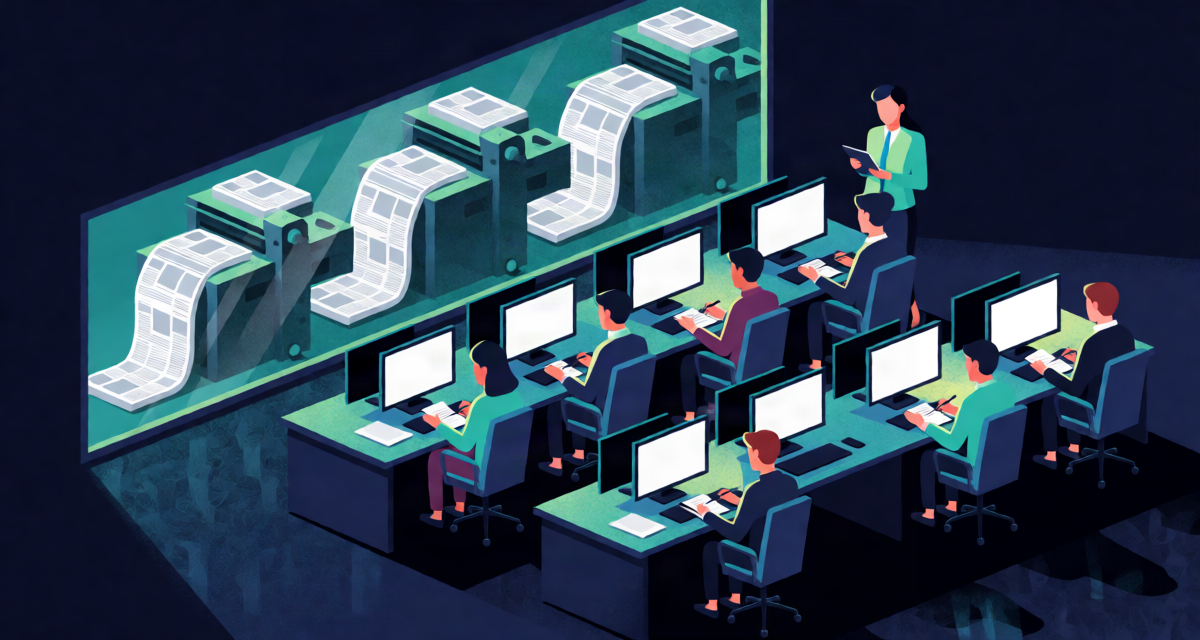
- The newspaper kept running. Journalists shifted to home laptops, Signal/WhatsApp threads, and out-of-band coordination. The daily print edition and the website continued, fed by a skeleton of workarounds.
- January 2023 confirmation: GMG confirmed the incident (suspected phishing entry per later statements) and that hackers accessed personal data of some UK employees — but stated no reader, subscriber, or advertiser data stores were touched.
- Attribution: A ransomware family was reported in coverage as likely Vice Society-style / Phobos-adjacent variants; the Guardian did not formally name an operator, and this article hedges accordingly.
Continuity scoreboard
| Function | Status during incident |
|---|---|
| Print edition | Published daily throughout; produced via offline/contingency workflows |
| Website + apps | Live throughout (external hosting, separate from compromised internal estate) |
| Internal networks / shared drives | Offline for weeks; forensic rebuild |
| Staff email/collaboration | Untrusted; moved to personal devices and messaging apps |
| Employee data | Some accessed per GMG confirmation (UK staff PII) |
| Reader/subscriber data | No compromise per company statements |
Why the Guardian’s story is different from most ransomware cases
Most ransomware stories are business-interruption stories: systems die, revenue stops, and the negotiate-or-restore clock runs. The Guardian’s is a continuity-engineering story. The website ran on infrastructure the malware couldn’t encrypt from the newsroom LAN. Print production had enough procedural muscle memory to operate on phones and USB sticks — 19th-century technology as a disaster-recovery tier. And the newsroom’s decentralization, usually a management headache, became resilience: reporters already worked from anywhere; the attack mostly removed the office network from the loop. The cost was real — weeks of degraded internal tooling, employee-data exposure, and an expensive rebuild — but the mission (publishing) never stopped. That inversion — the payload encrypted the company, not the product — is why this incident is taught as a continuity case first and a malware case second.
Timeline
| Date | Event |
|---|---|
| 2022-12-21 (approx.) | Ransomware detected in Guardian networks; containment begins |
| 2022-12-22 → 27 | Staff shifted to home working; print + site continue via contingencies |
| 2022-12-27 | Guardian publicly confirms “serious IT incident” (ransomware) |
| 2023-01-11 | GMG confirms ransomware + employee-data access; phishing suspected entry |
| 2023 Q1 → Q2 | Progressive restoration; retrospective on entry path; NCSC coordination reported |
Lessons for any newsroom (and most orgs)
- Separate the product’s infrastructure from the company’s. Publishing continuity existed because the website’s serving stack wasn’t joined at the hip with internal AD; the same principle applies to factories, dispatch, and store POS.
- Rehearse analog fallback. Print kept moving on phones and thumb drives because the process could be run manually; document your analog path before you need it.
- Treat email as pre-compromised. Suspected phishing entry plus weeks of distrust moved the newsroom to messaging apps; assume your primary comms will be untrusted exactly when you need coordination most — pre-position an out-of-band channel.
- Say what you know, when you know it. The Guardian’s staged confirmations (incident → ransomware → data impact) kept credibility intact; silence breeds worse headlines than honesty.
- Employee PII deserves reader-data paranoia. The confirmed harm landed on staff; HR systems hold enough for identity fraud and journalist-targeting — segment and monitor them like customer data.
Why it still matters in 2026
Journalism-targeting has only intensified — ransomware hits on media are attractive for both extortion and suppression effects, and state-adjacent actors have joined purely criminal ones. The Guardian case remains the cleanest demonstration that a media org’s real recovery objective is editorial output, not IT restoration: by that metric the attack failed within days, even as systems took months to fully rebuild. In 2026’s threat environment, newsrooms (and hospitals, utilities, and municipalities — the same continuity logic) copy the pattern: immutable offsite backups, air-gapped publishing paths, and rehearsed “publish-anywhere” drills. The ransomware didn’t kill the paper; the paper had already decided that was unacceptable.
Who attacked the Guardian?
Never formally confirmed by the organization. Contemporary reporting described the payload as consistent with families used by criminal groups in that period, and no credible public attribution to a named crew emerged. This article deliberately avoids asserting an operator; what’s established is the effect: encryption, containment, employee-data access, weeks of degraded operations.
Was reader data at risk?
Per Guardian Media Group’s statements, no reader, subscriber, or financial-data stores were accessed — the compromised estate was internal corporate IT. Independent verification was limited, but no contradicting evidence emerged publicly. The structural reason rings true: payment and subscription processing lived elsewhere, illustrating the protective value of architectural separation even when defenders never get credit for it.
Did they pay a ransom?
No payment was reported, and GMG’s statements and subsequent coverage described a restore-and-rebuild path rather than negotiation. The outage length — weeks of workarounds, months of restoration — is consistent with a no-pay response and its typical costs.
Part of the hmmnm.com security-timeline series — one event per month, 2021–2024, indexed here.
Where this sits in the broader pattern
The Guardian ransomware incident (December 2022) entered folklore for the wrong detail — the newsroom kept printing a 200-year-old newspaper through the attack — but the durable lessons are structural: a media organization running significant on-premises infrastructure (their Munich-based hosting) suffered encryption, refused payment, and recovered through the unglamorous discipline of offline backups and parallel rebuilds.
It belongs to the institutions-under-attack genre alongside the Rackspace entry and the broadcasting ransomware waves of prior years: attackers target organizations whose output is time-critical precisely because downtime pressures payment. The Guardian counter-example shows the leverage runs both ways — an institution with continuity culture, printed-product muscle memory, and separated backups converts the attacker strongest pressure (deadline) into their strongest proof (we still published).
The IT-side aftermath is the transferable part: a months-long migration off compromised infrastructure, honest reporting of the incident timeline, and the quiet lesson that the 2020s media ransomware wave accelerated cloud migration across the industry for exactly this reason. Refusal survived the incident; the architecture that made refusal survivable is what everyone else copied.
The bottom line. The presses ran because the backups were offline and the culture was old — continuity was the incident response. Build recovery capacity that assumes encryption, refuse with the confidence that tested restores provide, and let the deadline pressure work against the attacker instead of the victim. The Guardian printed through it; the lesson is to organize so you could too.
What the newsroom model teaches every organization
The transferable core of the Guardian story is continuity architecture: the ability to deliver the product while the information estate is encrypted. Every organization has some equivalent of the printing press — the capability that must survive IT compromise — and the incident is a prompt to identify and protect it explicitly: manual fallback procedures, cross-trained staff who can operate without systems, and the offline copies of whatever the product genuinely requires.
The backup discipline that enabled refusal deserves its technical paragraph: backups that were offline and therefore beyond the encryptor reach, restoration that was tested rather than assumed, and a rebuild that proceeded in parallel with continued operations rather than instead of them. The ESXiArgs entry in this series covers the hypervisor-side of the same requirement; the Guardian covers the human-and-process side. Both teach that recovery capacity is the currency in which ransom refusal is denominated.
And the media-industry context mattered: news organizations are chronically under-capitalized for security relative to their adversarial environment — state attackers, commercial espionage, and ideologically motivated crews all target them. The Guardian recovered well on institutional grit; the sector lesson is that grit should be subsidized by infrastructure, because the next newsroom may face a less competent attacker and a less forgiving deadline simultaneously.
Start the continuity exercise with one question per business line: if every screen went dark tomorrow morning, what would we still deliver, and how? The answers locate your printing press — and the gap between the answers and reality is the preparedness budget, priced by your own operations rather than by any vendor.
Run the exercise, write the answers down, and revisit them annually alongside the backup tests. Continuity discovered during the incident is continuity you do not have — the Guardian had theirs on paper for two centuries before the encryptor tested it, and that, more than any technology in the stack, is why the presses ran.
Two centuries of institutional memory, one tested offline backup strategy, one printing press that never asked permission from a file server: the whole incident response, pre-written. The modern translation costs one exercise and one document — the cheapest premium in this entire series for the capability it underwrites, and the only one with a two-hundred-year actuarial record behind it.
Frequently Asked Questions
{“@context”:”https://schema.org”,”@type”:”FAQPage”,”mainEntity”:[{“@type”:”Question”,”name”:”Did The Guardian pay the ransomware ransom?”,”acceptedAnswer”:{“@type”:”Answer”,”text”:”No. The Guardian refused payment, kept the newspaper printing during the December 2022 incident, and recovered over subsequent weeks using offline backups while migrating off its compromised infrastructure.”}},{“@type”:”Question”,”name”:”How did The Guardian keep publishing during the ransomware attack?”,”acceptedAnswer”:{“@type”:”Answer”,”text”:”Through operational continuity — printing continued via established processes while IT systems were rebuilt, demonstrating that separation between production capacity and compromised IT preserved the core business.”}},{“@type”:”Question”,”name”:”What is the main lesson from the Guardian ransomware attack?”,”acceptedAnswer”:{“@type”:”Answer”,”text”:”Offline, tested backups make refusal viable, and organizations should architect continuity so the core product can survive IT encryption — refusal is a capability prepared long before the incident.”}}]}
Related Reading
- What Studying 33 Historic Cyberattacks Taught Me About Defending Systems Today
- Passwordless in 2026: Why Passkeys Are Finally Killing the Password (and How Attackers Are Adapting)
- 2022–2024: Lapsus$, Change Healthcare & the XZ Backdoor
- Authoritative reference: CISA Known Exploited Vulnerabilities
- Change Healthcare ALPHV: The Ransomware That Broke US Healthcare
- Royal Mail vs LockBit: The $80M Ransom Refusal
- CDK Global Ransomware: US Car Dealerships Run on Pen and Paper