Quick Answer
On 13 November 2023, container shipping operations at DP World Australia — operator of ports in Sydney, Melbourne, Brisbane and Fremantle — halted after a cybersecurity incident forced the company to disconnect internet connectivity as a containment measure. The outage stranded roughly 30,000 shipping containers across four terminals for three days, forcing manual processing at reduced throughput for weeks after. Government agencies treated it as an infrastructure-level event from hour one; no ransom payment was publicly disclosed and no data-loss figure beyond a personnel-records exposure was ever confirmed. The incident became Australia’s reference case for cyber-driven supply-chain disruption.
DP World matters because it inverted the usual breach math: modest IT compromise, outsized physical consequences. Whatever touched the corporate network, the response — pulling the ports’ systems offline — stopped cranes. Economists later tallied the disruption in hundreds of millions of dollars of trade friction; cybersecurity committees in Canberra cited it while drafting critical-infrastructure rules for years afterward.
What happened
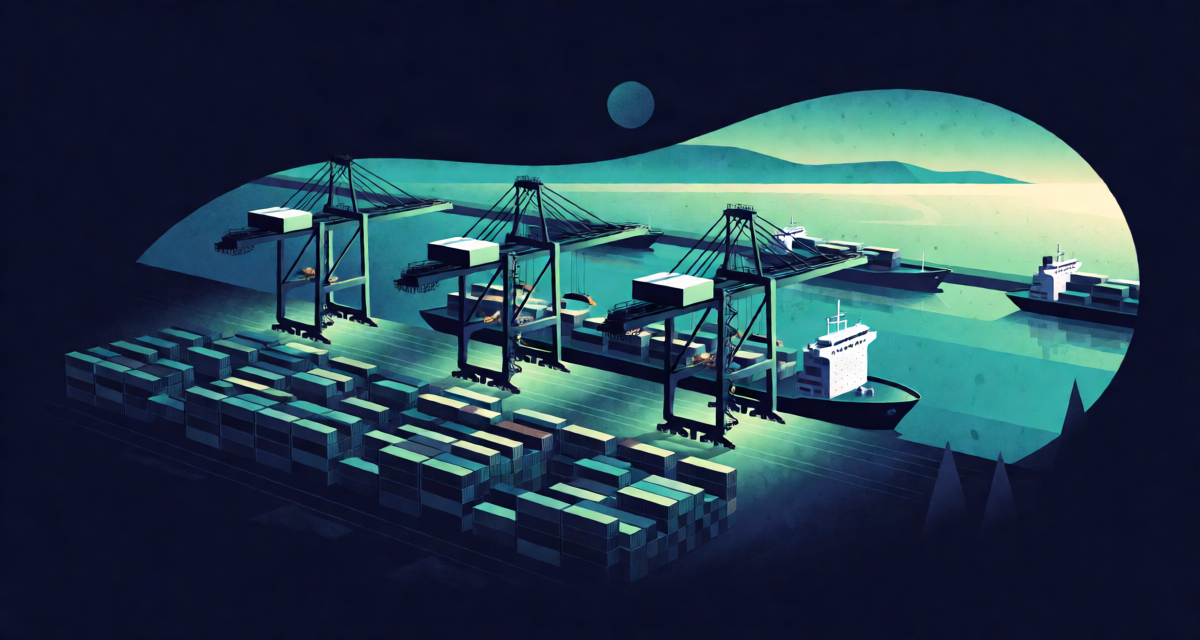
DP World Australia detected unauthorized activity on its IT environment over the weekend of 11–12 November and, early on 13 November, took the dramatic step of disconnecting its terminal operating systems from the internet to prioritize containment and assessment. Container movements stopped at Sydney (Port Botany), Melbourne, Brisbane and Fremantle. Vessels already at berth worked at reduced rates where possible, but truck queues built and landside freight operators pivoted to other transport modes within a day.
Operations resumed on 16 November once the company judged systems safe to reconnect — an unusually fast full restoration that suggested effective segmentation and backups. Investigations subsequently confirmed threat-actor access to a portion of personnel data (names, contact details, employment particulars), which DP World notified to affected current and former employees. Attribution stayed murky publicly: neither a named ransomware crew nor a state actor was officially confirmed by year’s end, though reporting leaned toward criminal intrusion. The Australian Signals Directorate and Cyber Security Centre coordinated under the government’s incident-response framework for critical infrastructure (SOCI Act obligations squarely engaged).
What makes the case study-able is the discipline of the response: deliberate isolation, three-day restoration, honest communication about reduced capacity, and no evidence of corner-cutting to restore faster at the cost of re-infection. Australian officials pointed to it later as evidence that the country’s critical-infrastructure regime was maturing.
The economics of a port standing still
Fremantle’s harbor alone moves the lion’s share of Western Australian trade; the four terminals collectively handle around 40 percent of Australia’s maritime container freight. Analysts estimated the three-day stoppage held up goods worth on the order of hundreds of millions of dollars, with perishable exporters and time-windowed importers taking the worst of it. The episode gave fresh ammunition to a debate the industry had run since NotPetya shut Maersk in 2017 and the Colonial Pipeline outage jackknifed fuel distribution in 2021: how much OT resilience is enough when the cost of disconnect is measured in crane movements per hour.
It also stress-tested the private-sector/government interface. The National Cyber Security Coordinator ran public briefings; intelligence agencies shared indicators while investigation proceeded. For port operators worldwide, the playbook previewed what regulators would soon demand: rehearsed isolation procedures, pre-mapped manual operating modes, and communication channels that keep freight customers informed without telegraphing incident-response detail.
Timeline
| Date | Event |
|---|---|
| 2023-11-11/12 | Unauthorized activity detected in DP World Australia’s IT environment over the weekend |
| 2023-11-13 | Internet disconnection containment measure stops container operations at Sydney, Melbourne, Brisbane, Fremantle; ~30,000 containers affected |
| 2023-11-14/15 | Partial landside recovery begins; federal coordination under National Cyber Security Coordinator |
| 2023-11-16 | Systems judged safe to reconnect; operations resume, backlog clearing begins |
| late Nov / Dec | Personnel-data exposure confirmed and notified; post-incident reviews fed into critical-infrastructure policy discussion |
Roster event anchor: 2023-11-13, the day operations halted publicly. Initial intrusion date is inferred; authorities never published a full intrusion timeline, so keep pre-13 November details hedged.
Defensive lessons
- Segmentation decisions are money decisions. DP World could isolate corporate IT because terminal ops ran on separable systems; firms whose IT and OT share fate cannot contain without stopping production — plan the blast radius you can afford.
- Rehearse manual modes of operating. Ports, plants and hospitals that keep paper procedures alive recover faster when systems must come down; those that don’t, improvise under crisis.
- Restoration speed is a security metric. Three days to full port restoration is world-class for an incident of this profile — achieved by preparation (backups, images, tested reconnect criteria), not heroics.
- Personnel data is breach data. The only confirmed exposure was HR records — a reminder that attacker value includes identity material useful for follow-on fraud and access.
- Communicate capacity honestly. Publishing realistic throughput expectations during recovery kept freight partners cooperating instead of litigating.
Aftermath in policy and industry
The incident fed directly into Australia’s escalating critical-infrastructure agenda under the Security of Critical Infrastructure (SOCI) Act framework, with government ministers citing DP World in support of strengthened cyber-incident reporting obligations and enhanced ASD engagement powers. Globally, port cybersecurity budgets rose in its wake: terminal operators re-ran segmentation audits, insurers repriced cyber cover for logistics assets, and maritime CERTs published port-specific detection guidance. A cluster of later port incidents — notably the 2024 seaport disruptions in other regions — each got compared to DP World’s handling, usually favorably. The company itself completed remediation quietly, and by mid-2024 was being cited in industry forums for the disciplined way it balanced containment, restoration, and disclosure.
Why it still matters in 2026
Ports are the canonical example of cyber risk converting to physical scarcity — and modern risk frameworks now score infrastructure operators on exactly that conversion path. DP World Australia demonstrated both the cost (a weekend’s intrusion buying three days of national trade friction) and the mitigation (segmentation, rehearsed fallback, rapid restoration). As ransomware economics keep pushing crews toward targets whose downtime society feels immediately — logistics, energy, health — the 2023 Australian port stoppage remains the cleanest modern case study of a done-right response under enormous pressure.
FAQ
Was ransomware involved?
Never officially confirmed. DP World and Australian authorities described a cybersecurity incident without publishing malware detail or extortion claims; reporting leaned criminal rather than state. Treat the “ransomware-for-downtime” framing as informed speculation.
Did DP World pay a ransom?
No payment was disclosed, and unlike ICBC a fortnight earlier there wasn’t even a credible threat-actor claim of a demand floating around. The visible losses were operational, not extortion economics.
What data was actually exposed?
Confirmed scope: portions of personnel records — current and former employees’ names, contact and employment details. No customer shipping-manifest exposure was confirmed publicly.
Why did operations stop entirely?
Because containment required disconnecting the terminals’ systems from the internet, and terminal operations depend on that connectivity for vessel, truck and container coordination. Stopping movement was the price of confident isolation.
How does this compare to Colonial Pipeline?
Same genus, different anatomy: Colonial’s 2021 shutdown was a proactive precaution against ransomware spreading into OT; DP World’s was a deliberate containment disconnection. Both proved that IT-side intrusions halt physical operations when segmentation and fallback aren’t rehearsed.
When the incident is physical: port operations as OT
The DP World Australia incident (November 2023, ~30,000 shipping containers stranded as a cyber incident idled port operations for days) delivered the OT-availability lesson in logistics form: the cranes did not fall to encryption of crane-control systems — the incident response containment itself, disconnecting operational systems until verified clean, stopped the physical operation. The Colonial shape at harbor scale: defensive caution, not attacker capability, produced the outage, and the cost priced in supply-chain terms — vessel queues, stranded freight, national import flow disrupted by days.
The doctrine items consolidated: OT incident response needs verified-degradation procedures — the ability to operate physical processes at reduced, attested assurance during containment, rather than the binary of full-operation-unverified versus full-stop; the containment decision itself is a business-continuity decision requiring joint IT-OT-executive authority (the isolation that saved integrity also stranded the containers, and nobody with the authority to weigh that trade had been in the room by design); and port-sector dependency mapping entered the national-security conversation on the evidence — logistics concentration is infrastructure concentration, the concentration thread at quayside.
The consolidation: DP World belongs beside Change Healthcare and Kronos in the critical-operations canon, with its distinctive contribution the verified-degradation concept — the missing capability that turned a contained cyber incident into a physical shutdown. Ports, pipelines, hospitals, payroll: the genre keeps teaching that the most expensive gap is between containment and recovery, and the capability that closes it is procedural, rehearsed, and jointly governed. The cranes stayed safe; the lesson is making them also stay working.
The verified-degradation concept deserves its standing-place in every OT runbook alongside the recovery stack: define, per physical process, the assurance floor at which reduced operation is acceptable during containment, the attestation that verifies it, and the joint authority that approves it. Ports, pipelines, and factories keep paying full-stop prices for binary response models; the runbook chapter that converts full-stop into verified-degraded costs a workshop with operations leadership and repays itself the first morning it is opened. The cranes, and everything they metaphor, deserve the workshop.
One workshop with operations leadership, one attestation floor per physical process, one joint authority empowered in advance — the verified-degradation chapter fits in a paragraph and repays across every containment decision an OT organization will ever make. The port taught it at container scale; the paragraph is available to every crane, pipeline, and pressroom reading; and the record keeps the seat warm for whichever operation writes the chapter next.
Related Reading
- What Studying 33 Historic Cyberattacks Taught Me About Defending Systems Today
- Passwordless in 2026: Why Passkeys Are Finally Killing the Password (and How Attackers Are Adapting)
- 2022–2024: Lapsus$, Change Healthcare & the XZ Backdoor
- Authoritative reference: CISA Known Exploited Vulnerabilities
- HermeticWiper: Cyber Arson on Invasion Eve
- Costa Rica’s Conti Emergency: When Ransomware Became a National
- Change Healthcare ALPHV: The Ransomware That Broke US Healthcare