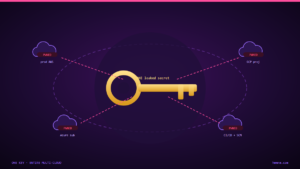

Quick Answer — In July 2023, Citrix disclosed CVE-2023-3519, a pre-authentication remote-code-execution flaw in its NetScaler ADC and Gateway appliances — and the disclosure landed after the wall had already been climbed: government networks were breached through exploited instances before a patch existed to install. The episode became the canonical case of edge-appliance zero-day economics: internet-facing, rarely monitored, slow to patch, and precious enough to attackers that they spend real zero-days on them — your perimeter box is the target, not just the door.
What happened
- The bug: An unauthenticated RCE in NetScaler ADC/Gateway — a device whose entire job is terminating encrypted traffic at the network edge, making it a perfect pivot: attack it, own it, and harvest everything that flows through it.
- The breach-before-disclosure pattern: Mandiant and others confirmed adversary access at government and critical-infrastructure organizations before July 18’s advisory — exploitation as a true zero-day, with session hijacking following initial compromise.
- The response: Citrix urged customers to patch and run a triage command; the industry learned within days that patching did not evict attackers — persistent webshells and planted accounts survived the upgrade, forcing incident-response engagements on appliances owners assumed were clean.
Why edge appliances are the softest target
| Property | Consequence |
|---|---|
| Internet-facing by design | Zero-day ROI: one bug, thousands of targets |
| Encryption terminator | Owns plaintext sessions — a breach is total surveillance |
| Appliance OS, not server OS | Weak host hardening, sparse logging, no EDR market |
| Maintenance windows feared | Patch latency measured in weeks-to-months |
| Login life-support | Single admin pane: session hijack equals identity takeover |
Timeline
| Date | Event |
|---|---|
| 2023-07-15 (approx) | Citrix privately warns customers of critical ADC/Gateway flaws; patches quietly appear |
| 2023-07-18 | Public advisory for CVE-2023-3519 (and sibling CVEs -3466/-3467); exploitation confirmed in the wild — our event date |
| 2023-07 → 08 | Mandiant attributes exploitation to suspected state-linked actors; government agencies worldwide report compromised appliance |
| 2023-08 | Post-patch persistence findings: webshells survive upgrades; assume-compromise guidance hardens |
| 2023-10 | KEV listing and CISA emergency directives push federal patch deadlines |
Defensive lessons
- Patch ≠ remediation on appliances. The most repeated mistake of the incident was treating upgrade-as-cleanup; persistence analysis (webshell hunts, credential resets, session invalidation) is mandatory post-patch — an appliance that was owned stays owned until proven otherwise.
- Assume zero-day residence on edge devices. When an internet-facing appliance discloses a pre-auth RCE with malicious exploitation confirmed, treat the box as breached from the bug’s first known exploit date, not your patch date.
- Monitor the appliance like a host. NetScaler/Gateway admin-plane logs, config diffs, and new-account creation are high-signal, low-noise detections — if your SIEM has zero visibility into the edge box, the edge box is a blind spot.
- Treat admin sessions as crown jewels. MFA the admin plane, fence it to management networks, and shorten session lifetimes — session hijacking was the post-compromise objective of choice.
The persistence problem nobody patched
The detail that separates this incident from a routine critical-CVE week: attackers anticipated the patch and planted persistence that upgrades don’t touch — webshells in appliance directories, rogue local accounts, and hijacked session tokens that survived the fix. Organizations that patched on day one and declared victory were, in a meaningful fraction of cases, still owned. The operational takeaway generalized across every edge-appliance incident since (Ivanti, Fortinet, Palo Alto): remediation for a compromised appliance is rebuild-and-reissue — reimage from trusted media, rotate every credential that touched it, invalidate all sessions, then patch — in that order of paranoia.
Why it still matters in 2026
CVE-2023-3519 is now taught as the entry case of the 2023–2026 edge-appliance crisis era: a running sequence of VPN, gateway, and file-transfer zero-days (Ivanti Connect Secure, Fortinet SSL-VPN, Citrix again, MOVEit, Barracuda) that reshaped perimeter doctrine. The 2026 consensus it helped form: edges are breach-first assets requiring assume-compromise playbooks — out-of-band config checks, canary files in web roots, and pre-staged rebuild pipelines. The perimeter did not just leak; it became the primary battleground, and this July was when doctrine officially changed.
Who was breached through it?
Per vendor advisories and incident-reporting: government agencies across multiple countries (including US federal networks flagged by CISA) and critical-infrastructure entities — precise victim lists remain unpublished, but the targeting pattern was espionage-consistent rather than crime-consistent.
Why weren’t these appliances monitored?
Because they were bought as toasters: install, terminate TLS, forget. The monitoring stack (EDR, FIM, auditd-class logging) never had an appliance port, and vendors only began shipping native detection telemetry after this era of embarrassments. Until then, out-of-band checks — diffing configs, enumerating accounts, hunting webshells — were the only truth.
What’s the difference between CVE-2023-3519 and the sibling CVEs?
Scope and auth: -3519 was the unauthenticated RCE — the crown jewel; -3466/-3467 were serious but weaker issues (information disclosure / auth-required problems) patched in the same wave. Defender priority followed that hierarchy: pre-auth RCE on an edge box tops every queue.
Should appliances still terminate SSL?
Should appliances still terminate SSL? Yes — but know what that means: whoever administers the terminator reads the plaintext. That trust deserves the same controls as your PKI root: restricted admin, hardware-backed secrets, monitored change, and a rebuild-on-suspicion policy that the 2023 appliances taught the hard way.
Part of the hmmnm.com security-timeline series — one event per month, 2021–2024, indexed here.
Detection and response playbook
CVE-2023-3519 in Citrix NetScaler was the definitive exploited-before-disclosure bug: government-affiliated actors had compromised critical-infrastructure NetScalers before Citrix knew the vulnerability existed. That inversion — patch available after dwell time already accrued — defines the playbook.
- Patch day one, then hunt — the CVE date is the floor, not the ceiling. Every victim was breached before the advisory. So the response to a disclosed edge-appliance RCE is patch-immediately plus mandatory compromise hunt, in that order, with no clean-bill-until-hunted shortcuts.
- Hunt the persistence that survives patching. Observed NetScaler intrusions planted credential-harvesting payloads on the appliances themselves, sometimes surviving firmware upgrades. Citrix eventually published forensic guidance and triage tooling; the generic lesson: appliances need file-integrity baselines and the ability to re-image, because restore-from-config can restore the implant too.
- Watch the appliance as an identity collector. An ADC sits on the authentication path — ideal for harvesting real user credentials as they flow. Any compromised NetScaler-class device means credential rotation for every identity that transited it, which in practice is the whole organization. Plan that rotation as a drill, not an improvisation.
- Stop exposing management planes. CISA advisories for this family repeated the same fundamentals: management interfaces off the internet, MFA everywhere, and appliance logging shipped off-box. The gap between organizations that had those controls and those that did not was the gap between a patch event and a breach disclosure.
- Assume the next one is already burning. The operational conclusion of exploited-before-advisory bugs is a standing compromise-assessment cadence for edge appliances — periodic hunts independent of CVE news, because the next CVE-2023-3519 will also have a silent head start.
Where this sits in the broader pattern
CVE-2023-3519 completed an edge-appliance triptych for 2023: the FortiOS issues on the VPN side, Ivanti Connect Secure entering its own emergency era months later, and NetScaler in the middle — all pre-authentication code execution on internet-facing appliances, all exploited before or within hours of disclosure, all by actors who understood that the appliance IS the perimeter.
The exploited-before-advisory property defines the response doctrine. When CISA and the Five Eyes agencies attributed the NetScaler campaign to state actors pre-positioning in critical infrastructure, they effectively told defenders the quiet part: for this asset class, assume the intrusion predates your awareness, always. That assumption — hunt by default, patch as floor — is now codified in every major edge-device guidance published since.
The persistence lesson is the incident within the incident: implants on the appliance surviving firmware updates forced Citrix to issue forensic tooling and full re-image guidance, because the restore path customers naturally reached for preserved the compromise. This recurring trap — config-restore restoring the implant — appears in router, VPN, and firmware incidents across the series. The rule it teaches: after appliance compromise, re-image from vendor media and rebuild config from source, never restore from the compromised device.
The bottom line. Breached before the advisory means your patch was late no matter how fast you applied it — so the only honest posture for edge appliances is patch-in-days plus hunt-by-default plus re-image-on-suspicion. Rotate everything that transited the device, ship its logs off-box, and keep the management plane off the internet. Critical-infrastructure attackers treated these appliances as the front door because they are; the doctrine is simply taking that seriously before the next advisory proves it again.
For teams building the standing compromise-assessment cadence, the minimum viable version is monthly: export appliance config, diff admin accounts against golden record, review file timestamps on writable paths, and confirm log shipping is alive. Twenty minutes per appliance, calendarized. That modest ritual would have caught every persistence variant this campaign used, weeks before any advisory mentioned the vulnerability that enabled it.
If the monthly ritual finds its way into existing change-management or asset-review meetings rather than a new meeting, it survives; standalone security rituals die of calendar competition within a year. Attach it to something that already happens.
Attached rituals live; orphaned ones die. Choose the meeting wisely.
The meeting you already attend is the one that survives the year.
Frequently Asked Questions
{“@context”:”https://schema.org”,”@type”:”FAQPage”,”mainEntity”:[{“@type”:”Question”,”name”:”What is CVE-2023-3519?”,”acceptedAnswer”:{“@type”:”Answer”,”text”:”An unauthenticated remote code execution vulnerability in Citrix NetScaler ADC and Gateway appliances, disclosed July 2023 — and exploited by attackers, including against critical infrastructure, before the advisory was published.”}},{“@type”:”Question”,”name”:”What persistence did attackers leave on compromised NetScalers?”,”acceptedAnswer”:{“@type”:”Answer”,”text”:”Credential-harvesting implants and webshells on the appliances that could survive patching or config-only restores — patching alone was insufficient; forensic triage and re-imaging were required.”}},{“@type”:”Question”,”name”:”What should you do when an edge-appliance RCE is disclosed?”,”acceptedAnswer”:{“@type”:”Answer”,”text”:”Patch immediately, then hunt for compromise assuming the exposure predates the advisory, rotate all credentials that transited the appliance, and keep management planes off the internet with off-box logging.”}}]}
Related Reading
- What Studying 33 Historic Cyberattacks Taught Me About Defending Systems Today
- Passwordless in 2026: Why Passkeys Are Finally Killing the Password (and How Attackers Are Adapting)
- 2022–2024: Lapsus$, Change Healthcare & the XZ Backdoor
- Authoritative reference: CISA Known Exploited Vulnerabilities
- Internet Explorer CVE-2020-0674: The Zero-Day Advisory That Opened 202
- Exchange CVE-2020-0688: A Default Key Made Every Server Alike
- CUPS RCE: The Linux Printing Story That Went Viral Before CVEs Landed