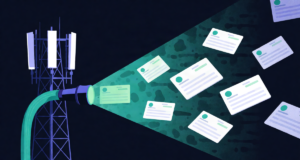
August 24, 2022: A threat actor posts a database of Plex user credentials — usernames, email addresses, and password hashes (bcrypt-salted) — to a hacking forum, claiming roughly 15 million affected accounts and, critically, accompanying the dump with salt values for the leak’s most valuable subset. Plex forces a password reset for its whole user base and discloses a breach of its forums server(s). The message hashing reveals a threshold story: bcrypt with adequate work factors slows offline cracking to an economic question (worth it for high-value targets only), and the accompanying data (emails, usernames salt-coded by service) gives exactly the cross-service credential-stuffing ore that fuels follow-on attacks at other companies. For defenders, the case is a compact template of the breach-listing economy: a media-server company holding a decade of user identity data becomes an input to everyone else’s attack surface, and “salted bcrypt” is honest engineering but not a magic perimeter — it just shifts the cost curve. The 2026 read is unchanged: credential data is toxic forever, rotate-or-stuff dynamics punish password reuse at internet scale, and the only structural exits are per-service unique credentials (password managers) plus phishing-resistant MFA wherever it matters.
The Plex credential leak (posted August 24, 2022; ~15M accounts claimed) was a forum-database exposure of usernames, emails, bcrypt password hashes, and salt values, published on a criminal forum with doxxing flair. What Plex did: forced password reset for all users, attributed the exposure to a compromised forums server, and recommended MFA enablement (already available on paid tiers; the leak accelerated universal-awareness of it). Why salts+bcrypt didn’t “solve” it: salts defeat rainbow tables and per-user hashing means attackers must crack each hash individually — but GPUs/ASIC farms still crack weak passwords within days; strong passwords survive. The leak’s real weapon was combination: email+username+password-hash triples enable precise credential stuffing at scale against every other service where a victim reused a password (the forum username “salt-coded by service” being a minor detail of data provenance). Who was affected: users of the Plex forums (the leaked set aligned with forum-related data, per contemporary analyses), though Plex mandated resets for all accounts as precaution. Follow-on: stuffing attacks at third parties, phishing pre-texts anchored to real account data, and the standard post-breach cycle of extortions and fraud attempts. 2026 lens: the leak is now a case study for the credential-resilience stack — unique passwords per service (password managers), phishing-resistant MFA on anything valuable, breach-monitoring services keyed to email addresses, and the reality that any credential store is a long-tail liability whose detonation schedule is set by users’ reuse habits. Plex recovered; the passwords, once in the wild, have had second lives everywhere else.
What happened
On August 24, 2022, a well-known credential-leak forum saw a new post: a database lined up with Plex’s identity data — usernames, emails, bcrypt hashes, and the per-hash salt values needed to attempt offline cracking. The poster claimed ~15 million rows and framed it as a flex. Plex’s response came in days: all-user password reset, statement attributing the leak to a compromised forums subsystem, and pointers toward MFA.
The technical read matters more than the drama. bcrypt with per-user salts is honest engineering: it prevents rainbow-table shortcuts and forces per-hash work. But “slow to crack” is a cost curve, not a wall — for the subset of hashes belonging to weak or previously-breached passwords, commodity GPU rigs finish the job quickly, and the attacker now holds a verified email:password pair. From there the harm detaches from Plex entirely: the pair fires at email providers, banks, gaming platforms, and corporate VPNs, wherever reuse and no-MFA intersect. Salt values in the dump simply lowered the per-hash work factor for whoever held it.
For the credential-listing economy, the Plex dump was mid-sized but perfectly shaped — a household-name brand, emails with real-world usage patterns (Plex being a home media product correlated with family/shared-account demographics), and the implicit threat of fallout phishing (“your Plex account was compromised, verify here”). Plex handled the operational basics well (fast reset mandate, clear comms), but the dump’s afterlife — in stuffing lists and phish pretexts — is the part security teams still live with.
The credential-stuffing economy, in one diagram
How a credential dump becomes
everyone's incident (Plex 2022):

  BREACH LISTING (Aug 24)
    forum post: ~15M rows
    username + email +
      bcrypt hash + salt
    household-name brand =
      attention + credibility

  OFFLINE ATTACK  (per hash)
    salts stop rainbow tables
    bcrypt slows each try
    weak/reused passwords
      -> cracked in days on
         commodity GPU rigs
    strong passwords
      -> survive (years)

  REUSE DETONATION (stuffing)
    verified email:password
      pairs fire at:
        email providers
        banks / fintech
        gaming / streaming
        corporate VPNs / SSO
    hits wherever reuse +
      no-MFA intersect

  SECOND-ORDER EFFECTS
    phishing pre-texts with
      real account data
      ("reset your Plex")
    targeted extortions
    combo-list enrichment
      (cross-merged with
       prior dumps)

  DEFENCES THAT ACTUALLY
  BIT (2022 -> 2026):
    per-service unique
      passwords (managers)
    phishing-resistant
      MFA (FIDO2/passkeys)
    breached-credential
      screening (ping
      lists at login)
    hash upgrades + rehash
      on next login
Impact and numbers
| Metric | Value |
|---|---|
| Leak posted | August 24, 2022 (criminal forum) |
| Accounts claimed | ~15 million (claims outran precision; data aligned with forums-era accounts, per contemporary analyses) |
| Data types | Usernames, emails, bcrypt password hashes, salt values |
| Plex response | Forced password reset for all users; compromised forums subsystem cited |
| Cracking outlook | Weak passwords: days on commodity GPUs; strong: computationally safe |
| Follow-on risk | Credential stuffing at third parties; phishing pre-texts anchored on real data |
Timeline
| Date | Event |
|---|---|
| 2022-08-24 | Dump posted to criminal forum (~15M rows claimed, bcrypt+salt included) |
| 2022-08-24 onward | Plex force-resets passwords; disclosure statement published |
| 2022-08 → 09 | Analyses map dump to forums-server exposure; stuffing waves begin at third parties |
| 2022 onward | Dump enters combo-list circulation; long-tail phishing and fraud attempts persist |
Why it still matters in 2026
Because the Plex leak is the textbook of the first commandment of credential hygiene — reuse is the vulnerability — and because its mechanics have been industrialised since. Credential stuffing is now AI-optimised (better targeting, lure personalisation, proxy-network scale), but its raw material is the same: verified pairs from dumps like this one, cross-merged into ever-richer combo lists. The defensive stack that the leak argued for has meanwhile become mainstream: password managers generating per-service uniques, breached-credential screening at login (checking submissions against known-compromised sets), phased migration to phishing-resistant MFA, and password-hash algorithm hygiene (bcrypt remains sound; the discipline is choosing work factors that track hardware and rehashing on next login). The 2026 nuance the 2022 case already contained: credential data is toxic forever. A 2022 dump still stuffs successfully in 2026 wherever users never rotated and operators never screened — which is why breach-list monitoring keyed to email addresses remains a standard personal-security practice, and why enterprises treat “our users’ emails are in a new dump” as an active incident-driver, not trivia. Plex’s own arc — reset, reinforce, move on — is the vendor-side template; the user-side template remains unchanged since August 2022: unique passwords, MFA everywhere it matters, and the humility to assume any credential you reuse is already in someone’s list.
Detection and hardening takeaways
- Treat credential dumps as your incident, not theirs. Subscribe to breach-feed intelligence keyed to your user emails; when a dump lands, screen your auth logs for successful logins using those identities from new devices/ASNs in the window after publication. The Plex leak’s victims included every organisation whose users reused a Plex password — screening converts that from invisible to actionable.
- Upgrade hashing as a programme, not an event. bcrypt with sane work factors is credible, and the leak showed salts alone don’t neutralise determined cracking. Maintain a hash-strategy roadmap (Argon2id where feasible, work-factor upgrades on hardware cycles), rehash on next login, and never ship legacy algorithms for new accounts. Credential protection is cumulative; make yours age well.
- Deploy stuffing-resistant auth. The dump’s follow-on harm lands at login endpoints: rate-shaping, device/IP reputation, impossible-travel checks, and breached-password screening (rejecting known-compromised passwords at set and reset) all cut stuffing yield. Layer MFA on top — push with number matching as floor, FIDO2/passkeys as target — because factors bound to origin and hardware kill the replay value of any verified pair.
- Assume phishing pre-texts will cite real data. Post-dump phishing quoting account details converts suspicion into compliance. Pre-arm users with the rule that reset requests arrive only through in-app/in-product channels, and instrument those channels so security comms are verifiable by default. Teach the reflex: data-familiarity is phishing fuel, not authenticity proof.
- Minimise and segment forums-adjacent identity stores. The exposed set came from a forums subsystem — a lower-trust, community-facing property. Segment such properties’ identity data from core account stores, keep retention lean, and hash with the same seriousness as production auth. Attackers shop the softest store bearing your brand; don’t let community infrastructure be it.
FAQ
Was the Plex leak the same as the LastPass breach?
No — different year, different vector, different company. The August 2022 Plex leak was a forums-database exposure with bcrypt hashes and salts posted to a criminal forum, answered by a forced reset. Confusion circulated because both involved credential data and household names in the same era; the lesson each teaches (reuse detonation and dev-environment trust paths respectively) is distinct.
My password was strong — should I have worried?
Rotation was still the right call, because the hash’s destiny wasn’t yours alone: the same email paired with a cracked weak password elsewhere, plus metadata, is stuffing and phish material regardless of your Plex hash surviving. Strong unique passwords survive cryptographically; the operational rule is rotate on publication, always, then verify MFA was on.
Why do salts accompany dumps — doesn’t that defeat them?
Salts aren’t secrets; they accompany hashes by design and must, for verification. Their purpose is preventing rainbow tables and batch shortcuts — forcing per-hash cracking work. Their presence in a dump doesn’t weaken bcrypt; it’s the normal shape of a hash database. The defence is the work factor and the password’s entropy, not salt secrecy.
Is bcrypt still good enough in 2026?
As an algorithm, yes — with disciplined work factors and login-time rehash upgrades. Modern practice increasingly prefers memory-hard Argon2id for new systems (raising per-crack cost on GPU/ASIC farms), but the Plex case’s lesson isn’t “bcrypt bad”: it’s that any hash strategy must be maintained as hardware improves, and that hashing protects the store, not the user, from reuse elsewhere.
Related Reading
- What Studying 33 Historic Cyberattacks Taught Me About Defending Systems Today
- Passwordless in 2026: Why Passkeys Are Finally Killing the Password (and How Attackers Are Adapting)
- 2022–2024: Lapsus$, Change Healthcare & the XZ Backdoor
- Authoritative reference: CISA Known Exploited Vulnerabilities
- Twitter’s 5.4M Scrape: When an API Becomes a Breach Oracle
- When Hackers Hunted the WHO: Cyberattacks in a Pandemic’s First
- Discord.io Breach: When Brand Adjacency Becomes Attack Surface