May 2022’s most quietly personal security story wasn’t a breach but a measurement: on the 25th, researchers (following years of Apple AirTag anti-stalking coverage and academic work like the 2019 “Tracking Anonymized Bluetooth Devices” paper systematising the field) published a practical demonstration that the Bluetooth Low Energy signals your phone emits continuously — for Find My-style device location, exposure-notification, smart-device pairing, and general app telemetry — constitute a de facto location-tracking beacon for anyone with ears. The primitive is boring and unavoidable: BLE advertising packets carry persistent identifiers (Apple’s rotating but linkable Find My tokens, Google’s Fast Pair and exposure-notification-era IDs, peripheral MAC-address rotation schemes) that, observed over time by distributed receivers (a hobbyist’s Raspberry Pi grid, a researcher’s wardrive, a stalker’s AirTag-in-the-wheel-well), resolve to a movement history of the carrying device — and, by proximity-identity, the carrying person. The 2022 wave of coverage and tools (scan-for-AirTag apps maturing on both mobile platforms, Tracker Detect on Android, Apple’s own alerts finally shipping by default) marked the mainstreaming of a truth the research community had documented since at least 2018–2019: anonymisation-through-rotation is a speed bump, not a wall — rotation intervals, token reuse across protocols, and the sheer density of fixed BLE infrastructure defeat it.
BLE (Bluetooth Low Energy) devices broadcast “advertising” packets containing identifiers used for device discovery and location features (Apple Find My, Google Fast Pair, exposure notification, smart tags). Because these identifiers are observable by any nearby receiver, they enable location tracking without GPS or network consent: static or slowly-rotating MAC addresses and feature tokens can be linked across time/space by distributed receivers (commercial BLE-tracking grids, researcher wardrives, stalker-deployed trackers like AirTags). Rotation (MAC randomisation, Find My’s rotating public keys) raises cost but is defeatable: rotation windows (15-min-class intervals) leave linkable clusters; cross-protocol correlations (a device’s BLE fingerprint: timing, signal-strength profile, advertising payload quirks) re-identify devices across resets; and Apple’s Find My crowdsourced network itself demonstrated abuse potential (AirTag stalking cases 2021–2022 prompted Apple/Android tracker-detection apps by 2022). May 2022’s milestone was mainstreaming: widespread coverage of tracking-via-BLE techniques, mature consumer detection tools (Apple Tracker Detect on Android, iOS alerts), and research (building on 2019’s “Tracking Anonymized Bluetooth Devices” systematisation) mapping the identifiers’ linkability. Defensive posture for individuals: disable BLE when not needed, audit paired/paired-adjacent devices, run tracker-scan apps periodically, and understand “off” vs “background” Bluetooth states per platform. For organisations: treat BLE-identifier emissions as location-observable telemetry in threat models (sensitive-site visits, executive protection), since receivers are cheap and passive.
What happened
This is an ecosystem-maturity story rather than a single exploit. The components arrived over years: BLE’s design (always-advertising peripherals for discovery and location features); Apple’s Find My network turning every nearby iPhone into a receiver for lost-device beacons; the exposure-notification systems of 2020 demonstrating mass BLE identifier exchange; and the research literature (notably the 2019 systematisation of ML-based re-identification of anonymised BLE traffic) establishing that rotation-based anonymity was linkable at scale. Then consumer hardware weaponised it for personal crime: AirTags (launched 2021) became the stalking-adjacent hardware of record, with 2021–2022 police reports and media coverage forcing platform responses — Apple’s unwanted-tracker alerts (shipped default through 2022) and Android’s Tracker Detect app (December 2021, matured through 2022).
By May 2022, the converging story — “your phone’s Bluetooth is a location beacon; here’s the proof, the tools, and the countermeasures” — had magazine treatments, researcher demos, and practical guidance. The May 25-class coverage synthesized: identifier classes and their rotation/linkability properties; receiver economics (sub-$100 grid coverage of a neighbourhood); the Apple/Google tracker-alert duopoly as the de facto remediation; and the gap: non-Apple/Google BLE ecosystems (smart tags, fitness bands, car key fobs, corporate badges) remained unalerted.
Nothing was “patched” in the traditional sense, because the exposure is architectural: BLE advertising is how the functionality works. The year’s real products were awareness, detection tooling, and design pressure on identifier schemes (faster rotation, unlinkable payloads, alert symmetry — culminating in the 2023 Apple/Google joint tracker-detection specification effort, directly traceable to this period).
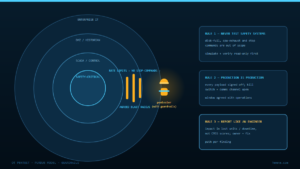
The tracking primitive
BLE identifier tracking mechanics:

  WHAT EMITS
    phones (Find My beaconing, Fast
    Pair, exposure-notification
    remnants, app telemetry)
    wearables/fitness bands
    smart tags (AirTag, SmartTag,
    Tile-class)
    car key fobs, corporate badges

  IDENTIFIER CLASSES
    peripheral MAC (randomised;
    15-min-class rotation windows)
    Find My public key (rotating;
    linkable by dedicated receiver)
    Fast Pair / continuous pairing
    model account-keyed payloads

  RECEIVERS (all passive, cheap)
   commercial BLE grids
    researcher wardrive rigs
    other phones (Find My network &&
    rogue scanner apps)
    stalker-deployed trackers

  LINKABILITY ATTACKS
    cluster rotation-window
    emissions (MAC A @ 14:59 ==
    MAC B @ 15:01 near same place)
    fingerprint advertising
    behaviour (interval jitter,
    payload layout, RSSI profile)
    cross-protocol correlation
    (Find My key + Fast Pair account
    binding == same human)

  IMPACT CLASSES
    personal stalking (AirTag cases)
    corporate espionage (site-visit
    detection)
    population analytics (wardrive-
    scale movement aggregation)

  MITIGATION MATURITY (2022)
    tracker alerts (Apple default,
    Android Tracker Detect)
    rotation-interval reduction
    user BLE-off hygiene guidance
    (2023: Apple/Google joint spec
    for cross-platform tracker
    alerts — direct descendant)
Impact and numbers
| Metric | Value |
|---|---|
| Primitive class | BLE advertising identifiers as persistent/location-linkable beacons |
| Key research anchor | 2019 “Tracking Anonymized Bluetooth Devices” (systematisation); 2022 practical demos/coverage |
| Consumer stalking hardware | AirTag (2021 launch; 2021–2022 police-reported stalking cases) |
| Platform response 2022 | Apple unwanted-tracker alerts (default); Android Tracker Detect app |
| Receiver cost | Sub-$100 per node; neighbourhood-scale grids feasible for hobbyists |
| Design descendant | 2023 Apple/Google joint cross-platform tracker-detection specification |
Timeline
| Date | Event |
|---|---|
| 2018–2019 | Research establishes BLE anonymisation linkability (rotation-window clustering, fingerprinting) |
| 2020 | Exposure-notification systems deploy mass BLE identifier exchange; public learns phones constantly emit BLE |
| 2021 | AirTag launch; stalking abuse cases documented; Android Tracker Detect ships (Dec) |
| 2022-05 | Mainstream synthesis: BLE-as-beacon coverage, detection-tooling maturity, defensive-guidance canon forms |
| 2023 | Apple/Google announce joint tracker-detection spec; platform-level alert symmetry arrives |
Why it still matters in 2026
Because the radios never went quiet and the receivers only got cheaper. Every phone still advertises; every smart tag ecosystem still ships; fitness bands still beacon their owners through airports; and the wardrive rig that once cost a researcher a hundred dollars now costs thirty and runs off a phone. The threat model calcified into standard guidance — executives and domestic-violence survivors get the same briefing now: assume BLE-emitting devices are location-observable, run tracker scans, prefer hardware with alert symmetry, and physically remove batteries from suspect tags. Meanwhile the architectural lessons echo forward: privacy-by-rotation failed (2022’s synthesis confirmed what 2019 proved — rotation windows and behavioural fingerprints re-link identities), so modern designs chase unlinkability (session-bound keys, no cross-protocol stable identifiers) and detection-by-default (Apple/Google’s joint spec made third-party-network alerts symmetric). In 2026’s IoT expansion, the BLE-beacon lesson generalises: any continuously-emitting identifier is a tracking surface, and the security question is never “does it leak location?” but “who can afford to listen, and what do they learn from correlating?”
Detection and hardening takeaways
- Assume emission, audit exposure. Inventory what you (and your family/executives) carry that emits BLE — tags, bands, keys, badges — and treat each as a potential beacon; the organisational version is sensitive-site policy (no BLE emitters in secure facilities) plus periodic sweeps.
- Use the alert symmetry that exists. Run both platforms’ tracker-detection (iOS built-in alerts, Android Tracker Detect/scanner apps) and third-party BLE scanners periodically; stalkers’ favourite property of early AirTags was victim-side silence, which default alerts and cross-platform specs eroded.
- Prefer unlinkable identifier designs when you build. If you ship BLE hardware: session-scoped identifiers, fast rotation with no linkable payload residue, and no stable cross-protocol fingerprint; assume your advertising behaviour itself is a fingerprint and document it in your threat model.
- Ble-off hygiene where feasible. Platform toggles differ (“off” vs “background” states; iOS keeps some functionality through 2024-era updates); know your device’s actual emission state, and for high-risk individuals, physical firmware/hardware decisions (no smart tag gifts from strangers, remove unfamiliar tags) matter more than settings.
- Monitor BLE at your perimeter. Organisations can run passive BLE monitoring (cheap SDR/BLE dongles + open tooling) at entrances and sensitive zones to log foreign trackers — the same receiver economics that enable stalking enable defence, and a weekly foreign-identifier report is a modest, high-value control.
FAQ
Does turning off Bluetooth stop the tracking?
Mostly, with platform caveats. A true off stops advertising; the catch is that “off” has shades — iOS has historically kept some BLE functionality alive unless disabled deeper (and toggles changed semantics across versions), and Find My’s encrypted network can beacon from “off” devices in some loss/finding states for a window. For threat models involving determined trackers, the durable answers are hardware: leave the tag at home, remove its battery, or don’t carry the device.
How is this different from GPS tracking?
Consent and infrastructure. GPS tracking requires the device to know its position and someone to exfiltrate it (network access, app permission). BLE tracking needs no cooperation from the device beyond its normal advertising, and no network access — the receiver does the locating. It’s also denser in cities (thanks to every other phone being a potential receiver) but coarser (presence/withdrawal at receiver locations, not continuous coordinates).
Can rotating MAC addresses defeat tracking?
They raise the cost, and 2022’s evidence says not enough alone. Rotation windows leave clusters; the advertising behaviour itself (timing jitter, payload structure, signal-strength fingerprints) re-identifies across rotations; and account-keyed features (Fast Pair-class) can bind identifiers regardless of MAC. Unlinkability needs payload-level design (session keys, no stable cross-feature identifiers), not just address randomisation.
Related Reading
- What Studying 33 Historic Cyberattacks Taught Me About Defending Systems Today
- Passwordless in 2026: Why Passkeys Are Finally Killing the Password (and How Attackers Are Adapting)
- 2022–2024: Lapsus$, Change Healthcare & the XZ Backdoor
- Authoritative reference: CISA Known Exploited Vulnerabilities
- Apple’s iOS 17.2 Bluetooth Fixes vs the Flipper Zero Craze
- WormGPT: The First Fraud-Focused LLM Goes on Sale
- App Tracking Transparency: Apple’s Consent Earthquake, Five Year